
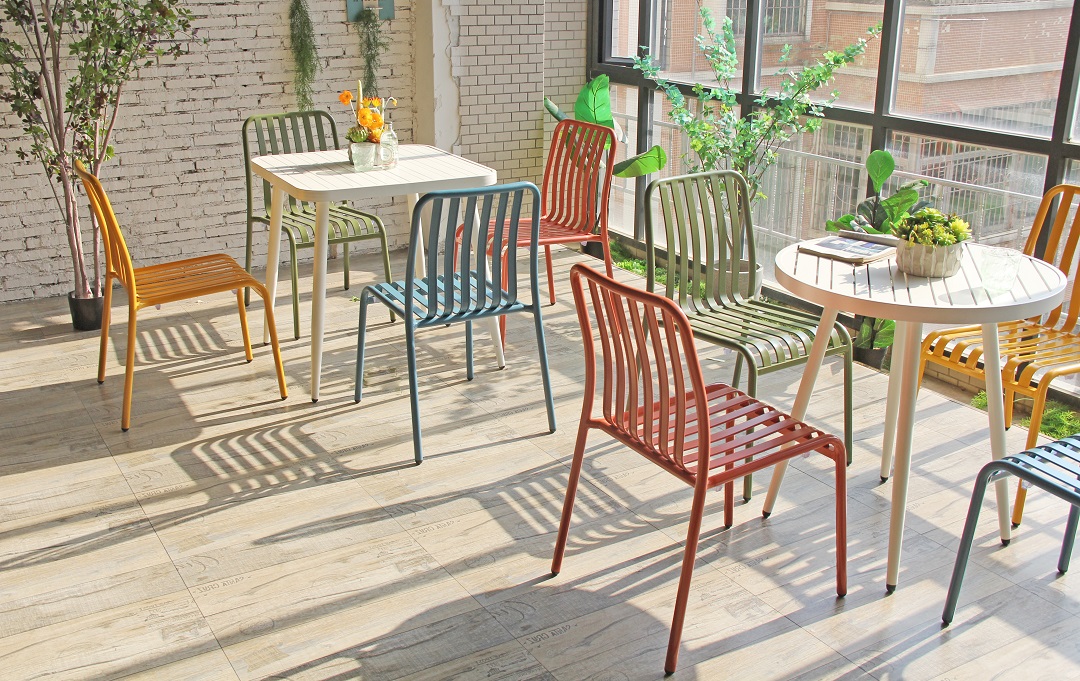
The one outdoor category where buyers stop gambling on the weather — and start calculating ten-year returns.
Every wholesaler knows the phone call. A retailer in Florida, a hotel group in Dubai, a café chain in Sydney — all calling for the same reason. Last season’s sets have already failed. Teak has split along the grain, mild steel has bled rust onto the terrace tiles, resin wicker has turned brittle and chalky in the sun. Nobody did anything wrong. The weather simply did what weather does.
Aluminum Outdoor Furniture behaves differently — not because aluminum is magic, but because properly engineered aluminum is indifferent to water, sunlight, frost, and salt. This guide explains why, how professional buyers should specify it, and how to turn that durability into repeat orders.
<
Outdoor furniture rarely fails from one dramatic event. It dies slowly, under four stresses acting at once:
Aluminum resists all four by nature. Within seconds of exposure to air, a thin, transparent aluminum oxide layer forms and seals the surface against further attack. That is the fundamental difference: aluminum does not need a coating to survive outdoors. Powder coating is there for colour, texture, and scratch resistance — not as the only barrier against corrosion.
Ask most suppliers whether their range is waterproof aluminum furniture and you will get a sentence. Ask a serious manufacturer and you will get a specification. Three things make “waterproof” real:
6063-T5 is the industry-standard extrusion grade for outdoor frames, chosen for strength, weldability, and finish quality. Wall thickness matters more than most buyers realise: around 1.2 mm suits light residential dining chairs, while commercial stacking chairs, loungers, barstools, and anything dragged daily should be specified at 1.6–2.0 mm. Put the number in writing on the purchase order — “aluminum frame” on a quotation tells you almost nothing.
Powder coating is applied electrostatically and cured at roughly 160–200°C, fusing pigment and resin into a continuous film far tougher than wet paint. Two details separate good from cheap: the coating must be applied after all welding and drilling, so no bare metal edge is left exposed, and pre-treatment must be complete — coating adhesion, not the powder itself, is what fails first in salty air.
Corrosion resistance is measurable. Salt-spray testing under ISO 9227 or ASTM B117 simulates years of salt-laden air in hours. For coastal hospitality projects, marine-grade systems reaching 1,000–2,000 hours before visible corrosion are the benchmark, while premium multi-coat finishes keep colour change below ΔE 2 — invisible to the human eye — after years of UV exposure. Ask for the report, not the adjective.
When those three boxes are ticked, waterproof aluminum furniture stops being a claim and becomes a number your customers can rely on.
<
For a wholesale buyer, the metallurgy only matters if it converts into container economics. Aluminum outdoor chair and table furniture wins on four commercial figures.
Buyers who run this list stop receiving the two-year failure phone call.
<
Guangzhou CDG Furniture Co., Ltd. has manufactured commercial chairs and tables since 2006 from a 10,000-square-metre workshop in Huadu District, Guangzhou. Nearly two decades of hospitality, event, and contract projects have shipped furniture to Australia, North America, South America, Europe, South Africa, and the Middle East — and the company exhibits at IMM Cologne, CIFF Guangzhou, Spoga+Gafa, and the Shanghai expo, so buyers can inspect finish quality in person.
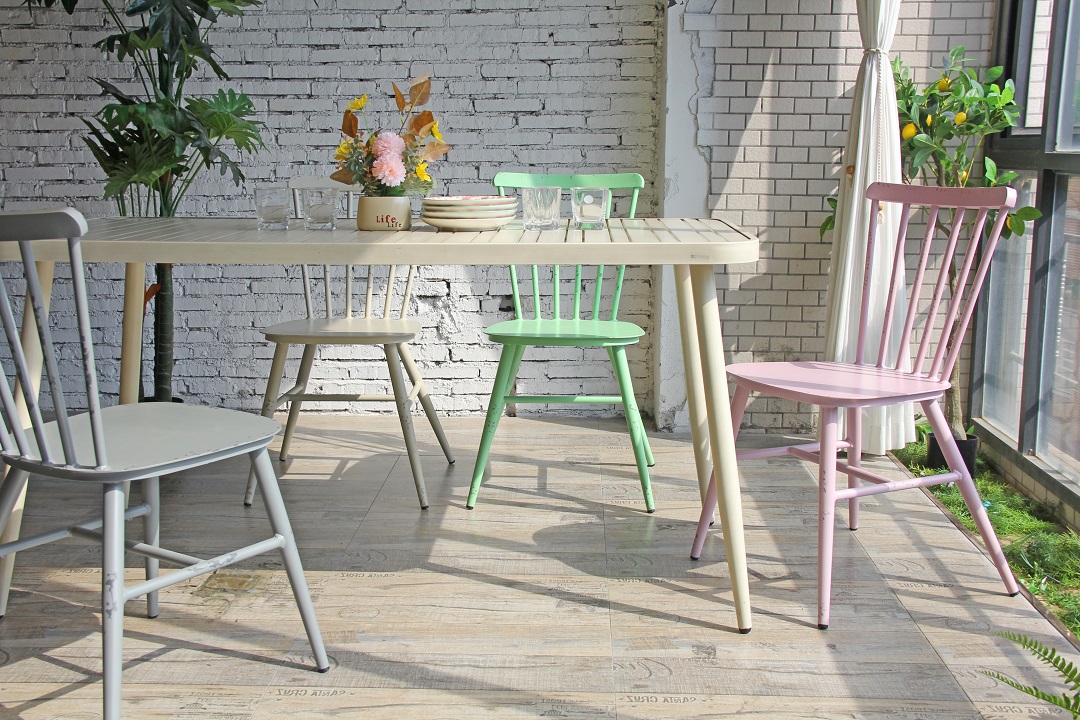
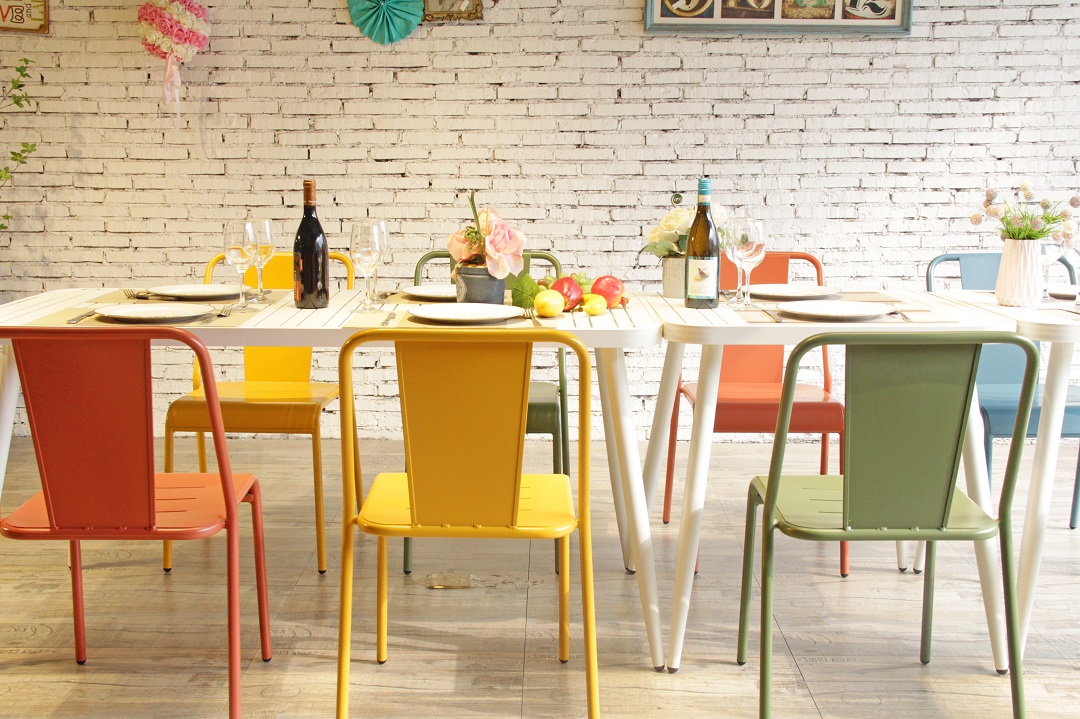
The outdoor aluminum program is built around the principles above. Stackable commercial chairs such as the 737S-H45-ALU garden event chair and the 727S-H45-ALU Windsor bistro chair are specified for daily stacking and dragging. Matching tables — the 714DT-ALU-SQ75 square outdoor table with its anti-aging vintage finish, or the 731DT-ALU-RE160 aluminum bistro set — let a buyer build a coordinated indoor/outdoor range from a single supplier.
Because CDG manufactures rather than trades, colour, size, finish, and branding can be customised for private-label programs, with modest order quantities and FOB, CIF, or EXW shipping through Guangzhou or Shenzhen. Full specifications are on the product pages.
Yes. Aluminum does not absorb water and cannot rust; its natural oxide layer prevents corrosion. What varies between suppliers is the finish and the joint quality. Specify alloy, wall thickness, coating process, and salt-spray results, and the furniture will outlast the weather rather than merely survive it.
Aluminum releases heat faster than iron or timber, so it does not store heat the way denser materials do. Light-coloured coatings, open mesh or slatted seats, and breathable cushions keep surface temperatures comfortable in high-UV markets.
Yes — that is the point of the category. Well-specified aluminum outdoor chair and table furniture stays on the terrace through rain, frost, and summer UV with only routine cleaning. Cushions and textiles need seasonal care, not the frames.
It depends on the model and the customisation level. Aluminum trial orders typically start at around ten sets, with production scheduled against the confirmed sample. Container programs are planned around your shipping calendar, so early specification conversations shorten lead times.
Rain, sun, frost, and salt will keep testing every piece of furniture you import. The only question is whether your supplier engineered for them. If you want a partner who can show you specifications, test data, and finished product rather than a brochure, talk to the CDG Furniture team. Send us your market, your climate, and your target retail price, and we will come back with a quoting package you can take straight to your customers.
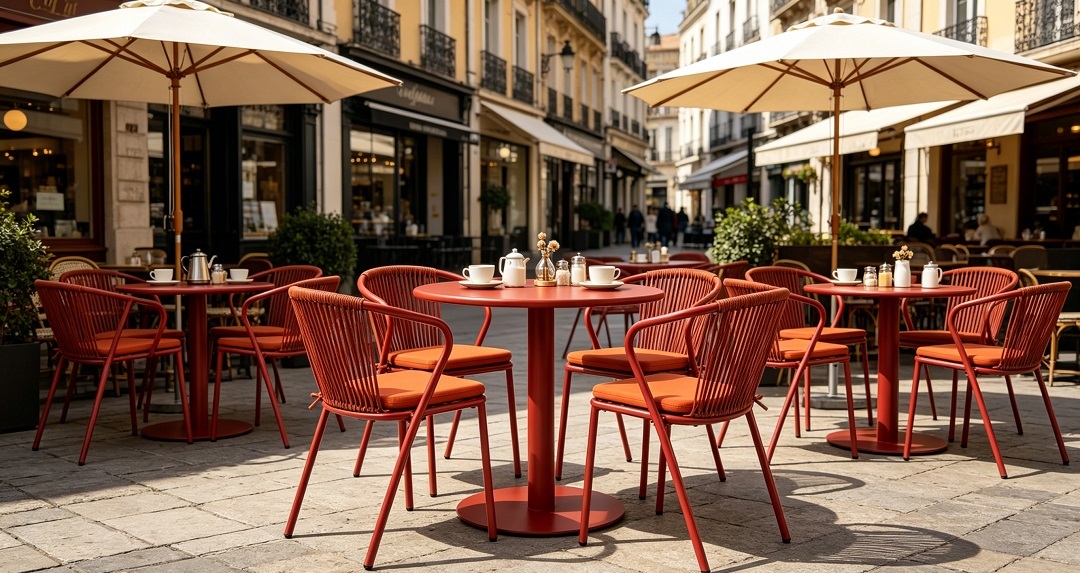
As temperatures drop and patio season winds down across many parts of the world, outdoor restaurant operators face a critical decision: how to protect their outside furniture investments through the colder months. Whether you run a beachfront café in Australia, a bistro in London, or a rooftop restaurant in New York, the steps you take now will determine whether your outdoor chair and table furniture survives to serve guests next spring—or ends up in a landfill.
At CDG Furniture, we’ve been manufacturing commercial-grade outdoor furniture since 2006, supplying restaurants, hotels, and hospitality venues across North America, Europe, Australia, and the Middle East. In this guide, we’ll walk you through a practical, material-specific approach to preparing your outside furniture for autumn and winter.
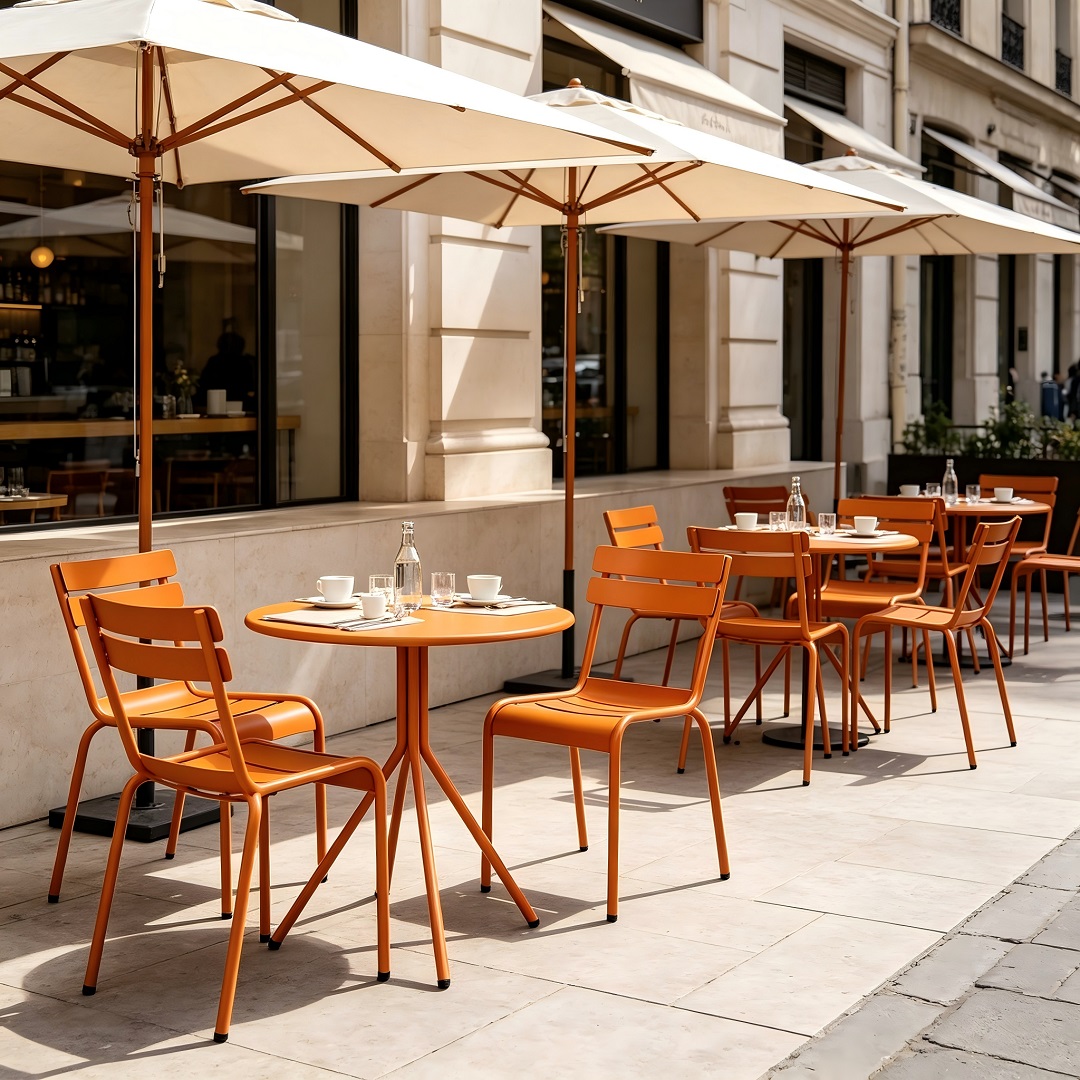
<
For restaurant operators, outside furniture is not a seasonal accessory—it’s revenue-generating infrastructure. Your patio seating earns money on every sunny evening, and replacing deteriorated furniture every 18 to 24 months erodes your margins.
The global commercial outdoor furniture market was estimated at USD 21.60 billion in 2024 and is projected to reach USD 37.77 billion by 2033, growing at a CAGR of 6.6%. This growth reflects increasing demand for durable, weather-resistant furniture that can withstand year-round exposure. Proper winterization isn’t just maintenance—it’s asset protection.
Before you cover, store, or treat any piece of outside furniture, deep clean it. Dirt, food residue, and organic debris left on surfaces through winter can cause staining, mold growth, and surface degradation.
Use a soft-bristle brush and a mild soap-and-water solution—roughly one tablespoon of mild detergent per gallon of water. Avoid abrasive cleaners or high-pressure washers, which can damage powder coatings and scratch aluminum surfaces. Pay special attention to crevices, joints, and underside surfaces where moisture and debris accumulate.
After cleaning, dry every piece completely. This is non-negotiable. Trapped moisture is the single biggest cause of winter damage, particularly in cold climates where water freezes and expands inside frames and joints.
Different materials demand different winterization approaches. Here’s how to treat the most common commercial outdoor furniture materials.
Aluminum is one of the best choices for commercial outdoor chair and table furniture because it’s naturally resistant to water and won’t rust. However, powder coatings can chip.
Inspect frames for scratches or chips before winter. For small nicks, apply touch-up paint to prevent exposed metal from oxidizing. To add an extra layer of protection, apply a coat of clear liquid car wax at least once a year—this shields the finish from moisture and UV exposure. For coastal venues, clean aluminum frames weekly or biweekly to remove salt residue, and wax quarterly.
PE rattan furniture with aluminum frames is moisture-proof, anti-aging, and insect-resistant, making it a low-maintenance option for restaurants. Clean the woven surfaces with mild soapy water and a soft brush, then rinse and dry. If your venue is in a harsh winter region, cover the furniture or move it to a sheltered area. Avoid stacking heavy items on woven surfaces, which can deform the weave over time.
Teak contains natural oils that help it handle moisture better than many other wood species. For teak outside furniture, autumn is the ideal time to clean the surface and apply a protective sealant or oil. If you prefer the silver-grey patina that teak naturally develops, you can skip the oil—but a sealant will still help prevent surface cracking from freeze-thaw cycles.
Always elevate wooden furniture off the ground using pavers, pallets, or risers to keep legs out of standing water and melting snow.
Steel and wrought iron require the most vigilance. Inspect for rust spots and treat them immediately with a rust converter and touch-up paint before winter sets in. Like aluminum, these materials benefit from an annual wax application. If your furniture is not powder-coated, consider applying an exterior-grade paint before the cold season.
Fabric cushions are the most vulnerable component of any outside furniture setup. Even “weather-resistant” cushions are not immune to mold or fading during extended winter exposure.
Remove all cushions before winter. Wash them according to the manufacturer’s instructions and dry them completely—ideally in direct sunlight. Store cushions indoors in breathable storage bags or lidded containers with ventilation holes. Avoid wrapping cushions in plastic, which traps condensation and promotes mold growth.
If you must leave cushions on-site, use high-quality, waterproof, UV-resistant covers designed specifically for outdoor use. But for commercial restaurant operations, indoor storage is always the superior option.
If you can’t store furniture indoors, protective covers are essential. However, the wrong cover can do more harm than good.
Choose breathable, waterproof covers made from solution-dyed polyester or similar materials. Non-breathable covers trap moisture underneath, creating ideal conditions for corrosion and mold. Look for covers with mesh air vents and drawstring cord locks to secure them against winter winds.
For tables left outdoors, place a bucket or ball in the center of the table under the cover to create a peak that allows rain and snow to run off rather than pooling. Secure covers with bungee cords or ties around the legs—winter storms can lift covers and expose furniture to the elements.
Where and how you position furniture during winter matters as much as how you cover it. Furniture placed directly on wet ground absorbs moisture through its feet and lower frame. Use wooden blocks, pallets, or commercial furniture risers to keep legs off the ground.
Stack chairs and foldable items neatly in a dry, ventilated space, but never store resin or aluminum furniture upside down—water can accumulate inside frames and cause damage when it freezes. Store frames upright so any accumulated moisture drains naturally.
For many restaurant operators, completely shutting down outdoor seating during autumn and winter represents lost revenue. If your climate allows—or if you’ve invested in patio heating and enclosures—you can extend your outdoor dining season significantly.
Removable enclosures, such as pergolas with canopy structures, allow you to open or close your patio depending on temperature. For colder regions, permanent structures offer greater stability against adverse weather. When selecting furniture for year-round outdoor use, choose materials with natural insulation properties—synthetic wicker, teak, and specialized resin do not become freezing cold to the touch like bare metal.
This is where your outside furniture investment strategy matters. Furniture designed for commercial use, with powder-coated aluminum frames and weather-resistant finishes, can remain outdoors through autumn and winter with proper care—allowing you to capture revenue from guests who enjoy the crisp-weather dining experience.
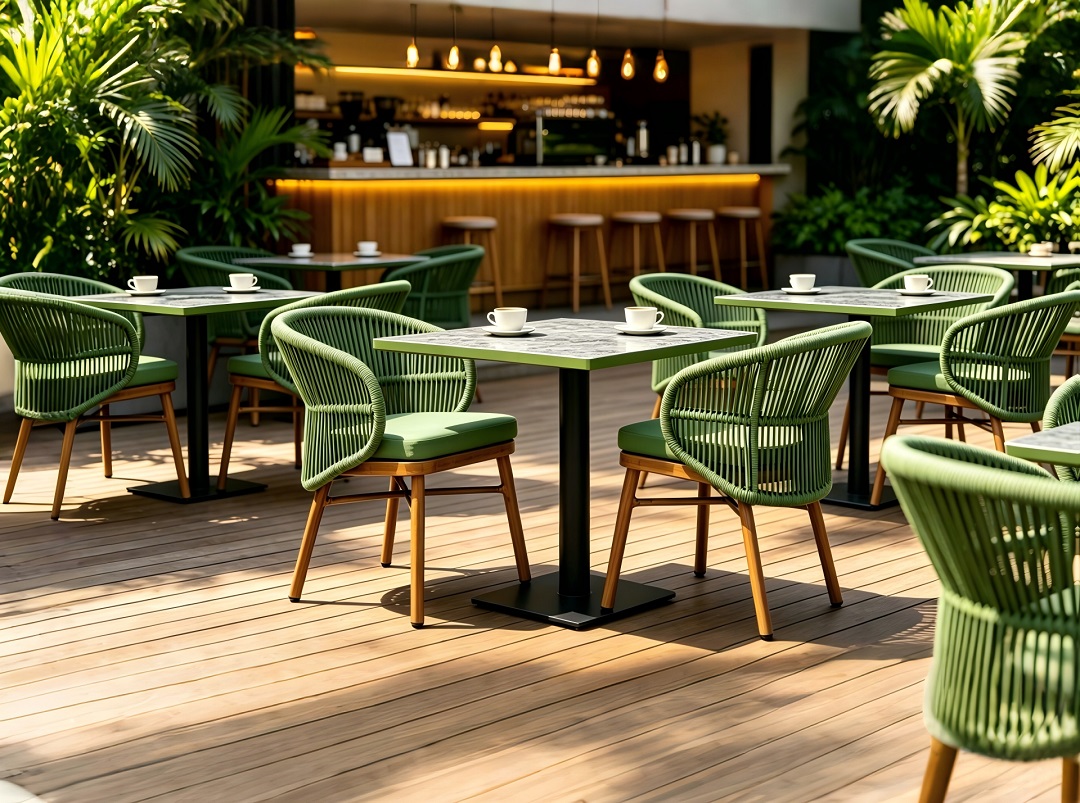
At CDG Furniture, every piece of outside chair and table furniture we manufacture is designed with commercial endurance in mind. Our 10,000-square-meter factory in Guangzhou produces outdoor furniture using powder-coated aluminum frames, UV-stable synthetic wicker, and premium teak and acacia hardwoods. Each piece is handcrafted and finished to withstand daily commercial use and seasonal weather extremes.
We understand that restaurant operators need furniture that performs, not just looks good on delivery day. That’s why our outdoor collections are engineered with:
Our products serve hospitality clients across Australia, North America, Europe, South Africa, and the Middle East—each with different climate challenges. Whether you need outside furniture for a tropical terrace or a Scandinavian winter garden, we can customize specifications to match your local conditions.
Before the first frost arrives, run through this checklist:
If your current outside furniture didn’t survive last winter, or if you’re planning a new outdoor dining space that can handle year-round commercial use, CDG Furniture can help. We offer OEM and ODM services for restaurant and hospitality clients worldwide, with customizable materials, finishes, and designs tailored to your climate and brand.
Contact us today to discuss your outside furniture requirements—whether you’re sourcing a single prototype or a full container order. Our team will work with you to select the right materials, configurations, and protective specifications for your venue’s unique conditions. Your patio deserves furniture that works as hard as you do.
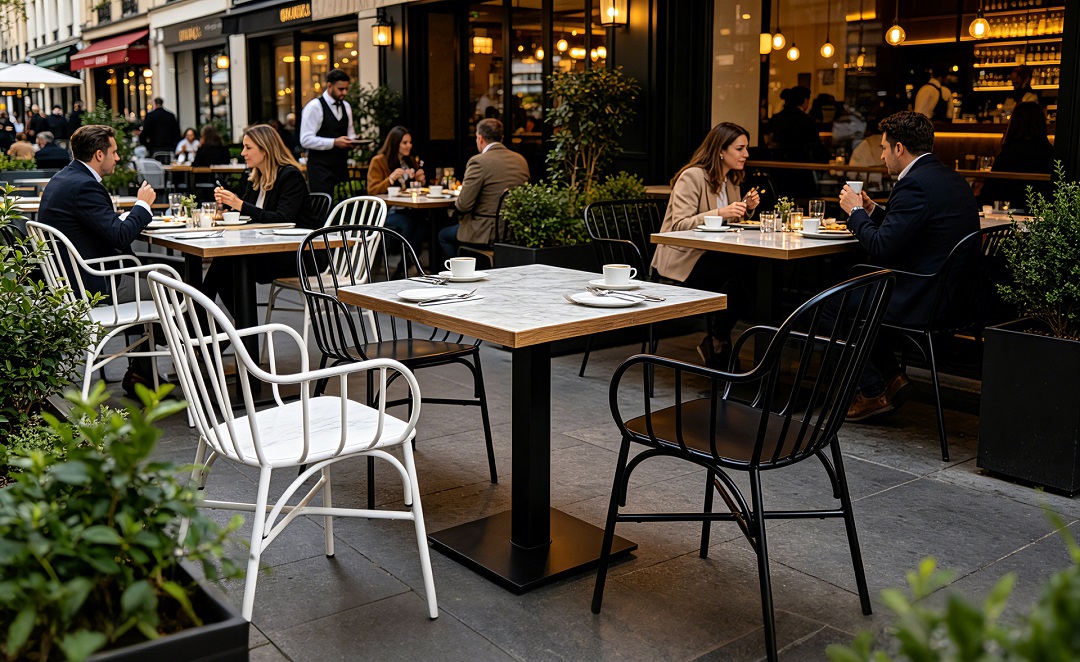
Running an outdoor‑focused restaurant, bistro, or café means your patio seating earns revenue every sunny evening. Yet countless hospitality operators face the same frustrating reality: brand‑new‑looking outdoor furniture starts to degrade, wobble, fade or corrode in as little as 24 months.
You invested capital expecting multi‑year service for your terrace. Instead, you face unexpected replacement costs, negative guest impressions, emergency sourcing, and wasted budget. Too many buyers blame rain or sunlight alone. The truth is most premature furniture failure stems from poor material choices, low‑grade manufacturing, and misunderstanding commercial‑grade requirements for outdoor furniture, especially aluminum outdoor furniture and aluminum outdoor chair units that fill most modern restaurant patios.
At CDG Furniture, a Guangzhou‑based commercial outdoor furniture manufacturer with nearly 20 years supplying global restaurants, hotels and event venues, we see these avoidable failures every day across real‑world hospitality projects. This article breaks down exactly what breaks your patio furniture, what separates consumer‑grade pieces from commercial‑ready aluminum solutions, and what restaurant owners should look for when sourcing to stop repeating costly two‑year replacement cycles.
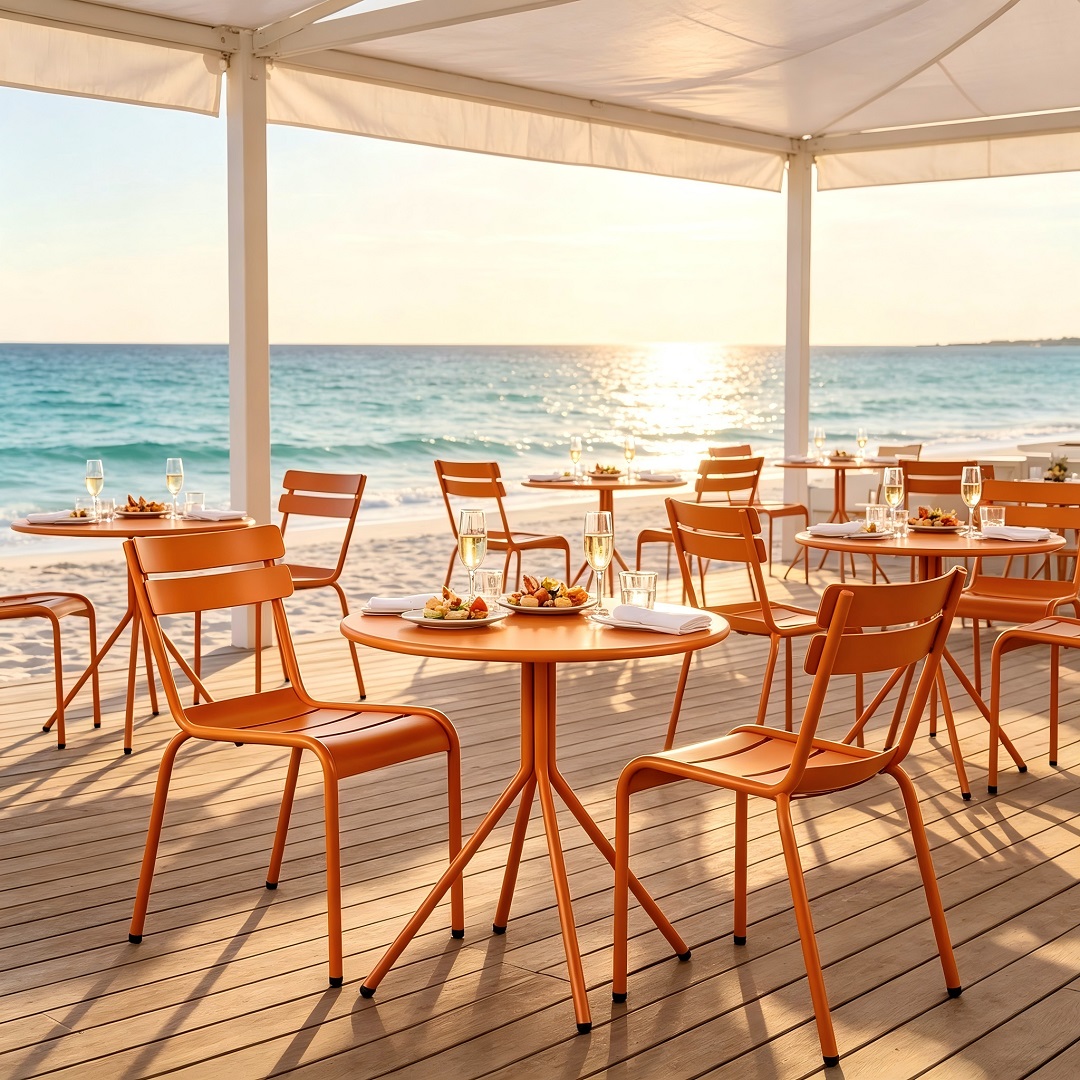
Most restaurant operators assume heavy rain or strong sun is the main enemy. In commercial real‑world use, it is the combination of environmental stress plus constant human abuse that accelerates failure.
Even metal furniture relies on surface finishes for UV‑protection and defence against salt, food spills, drink splashes and coastal salt‑laden air. Cheap powder coating scratches easily when chairs stack, drag across decks or receive regular guest impact. Once tiny chips appear, moisture seeps underneath. For steel frames, rust spreads rapidly beneath the coating, bubbling paint and weakening joints. Even for aluminum outdoor chair products, inferior thin powder coats will chalk, fade and peel, leaving aluminum vulnerable to pitting oxidation in humid or seaside locations.
Many budget outdoor furniture suppliers cut corners by using thin‑gauge metal tubing. Restaurant patio chairs are subject to non‑stop abuse: guests lean back, shift weight, staff stack chairs for nightly storage, and furniture gets dragged for deep cleaning. Hairline cracks open at poorly executed weld points. Within 18‑24 months, chairs wobble, legs bend, and whole units become unsafe for customer seating — even if they still look fine from a distance. Many imported “aluminum outdoor furniture” mixes thin aluminum tubing with hidden steel inserts, introducing rust points you cannot spot on delivery day.
Coastal restaurants face salt‑air corrosion; desert venues deal with brutal continuous UV fading; northern European locations cycle through freeze‑thaw rain and frost. Furniture built for mild inland residential backyards cannot survive these commercial‑location stressors. Wood tabletops warp, crack and rot. Wicker frays. Low‑grade plastic becomes brittle and cracks under temperature swings. Many buyers purchase furniture based only on photos and low unit price, without testing performance for their operating environment.
Consumer‑targeted outdoor sets are engineered for occasional weekend family gatherings, not 12‑hour daily restaurant operation, repeated stacking, heavy customer use, and frequent cleaning. When restaurant owners buy consumer‑grade aluminum outdoor chairs at wholesale‑looking prices, they almost always face full replacement around the two‑year mark, driving up total ownership costs dramatically, even with cheaper initial invoices.
When specified correctly, premium aluminum outdoor furniture solves many of these pain points for restaurant, café and bistro operators. Quality aluminum does not rust like carbon steel. It forms a natural protective oxide skin when exposed to air, resisting corrosion in humid, coastal or salty patio environments.
Our commercial‑grade aluminum outdoor chair collections use thick‑wall 6000‑series aluminum tubing with reinforced welded joints designed for stacking, dragging, and thousands of guest sits. High‑quality UV‑stable powder coating resists chipping, fading, chalking, and chemical damage from food spills and regular restaurant cleaning products. Unlike solid wood outdoor tables, aluminum table frames never rot, swell or crack with changing humidity. Light weight is another huge operational benefit: staff can stack chairs quickly for closing‑time storage or re‑arrange patio layouts for private events without heavy lifting or risking back‑injuries.
This does not mean every aluminum outdoor chair will automatically last for 8‑10 years in your restaurant. Bad aluminum furniture still exists. Thin tubing, cheap paint‑grade powder coating, incomplete welds and mixed‑material construction will still create two‑year failures, even on an aluminum base. Restaurant owners need to know what specifications to demand from manufacturers, instead of judging only on visual appearance and price per piece.
If you want to break the cycle of replacing your patio furniture every two years, add these non‑negotiable checks to your sourcing checklist for aluminum outdoor furniture:
Confirm frames are 100% heavy‑gauge aluminum, without hidden steel reinforcing inserts that introduce rust risks. Verify welds are fully ground and sealed, no sharp or incomplete joints. For aluminum outdoor chair models intended for nightly stacking, test real‑world stacking stability before bulk ordering.
Require UV‑resistant, hospitality‑grade powder coating. Cheap coatings fade and chip rapidly under constant restaurant‑patio stress. Ask suppliers about coating thickness and performance test data for coastal or high‑UV conditions relevant to your venue location.
Your furniture must survive stacking, dragging, regular cleaning with commercial cleaners, and uneven patio or deck surfaces. Anti‑scratch floor glides prevent leg damage and floor scuffing. Slatted seat and table designs allow rainwater to drain fast, avoiding standing water that accelerates surface degradation.
A cheaper chair that fails in two years forces you to pay twice for product, shipping and installation. Slightly higher‑investment commercial aluminum outdoor furniture delivers far better long‑term value by extending service life to 7‑10 years for most restaurant patios.
Suppliers that focus purely on home‑garden retail often lack field experience with real‑world restaurant patio wear. Partner with manufacturers that have completed hospitality and restaurant outdoor‑furniture projects globally across coastal, tropical, cold‑climate markets, like CDG Furniture’s completed venue projects for restaurants, bars and event spaces across Europe, Americas, Middle East and Africa.
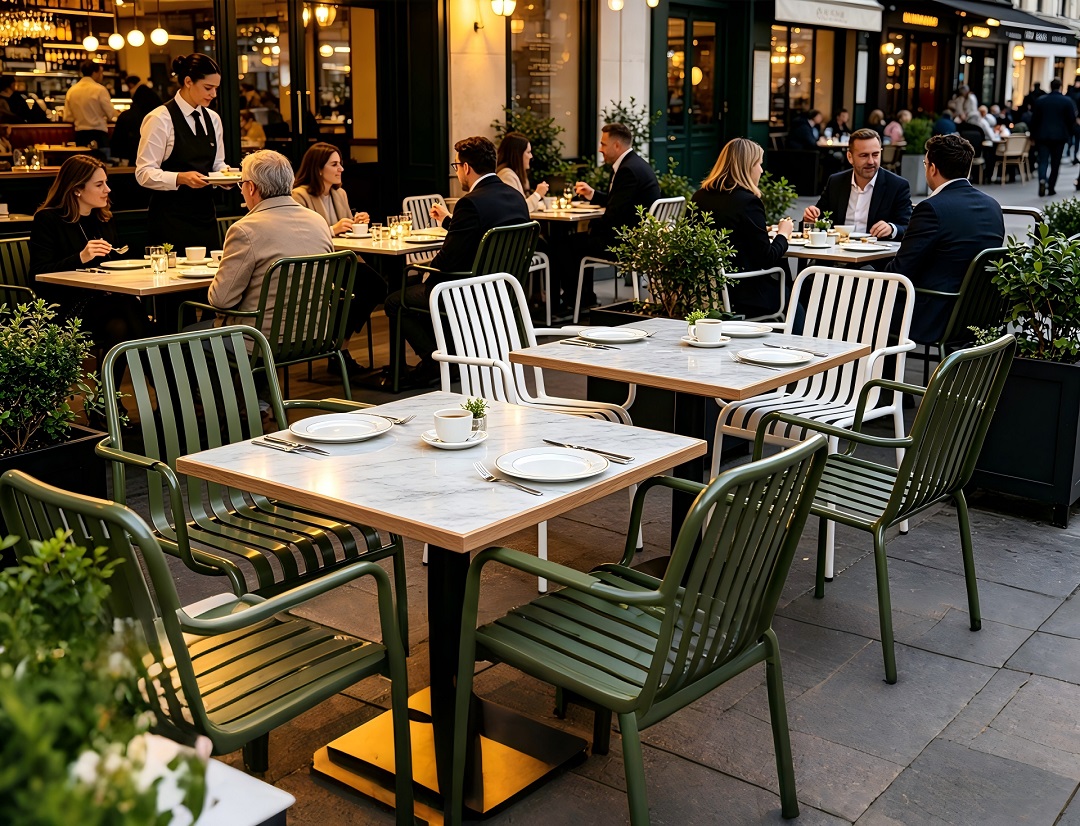
Premature outdoor furniture failure after two years is rarely bad luck. It is almost always the outcome of mis‑specified materials, residential‑grade products used in high‑demand commercial spaces, or low‑cost manufacturing shortcuts.
Aluminum outdoor furniture and well‑engineered aluminum outdoor chairs represent one of the most practical long‑term investments for restaurant outdoor seating — but only if you select true commercial‑grade units built for your venue’s climate and daily operating stress.
Stop budgeting for repeat furniture replacements every second season. Get furniture built to perform year‑after‑year so your patio can reliably generate guest revenue instead of generating unexpected repair and replacement headaches.
Ready to source durable aluminum outdoor furniture for your restaurant patio?
CDG Furniture manufactures full ranges of stackable aluminum outdoor chairs, dining tables and complete patio sets tailored for restaurants, bistros, hotels and event venues worldwide. Our team can walk you through material specifications, finish options, custom colour choices and bulk wholesale pricing aligned with your venue’s climate and operational requirements.
Request your free project consultation and quotation today — share your patio dimensions, location climate and seating‑volume needs, and we will send you targeted product recommendations for your hospitality business.
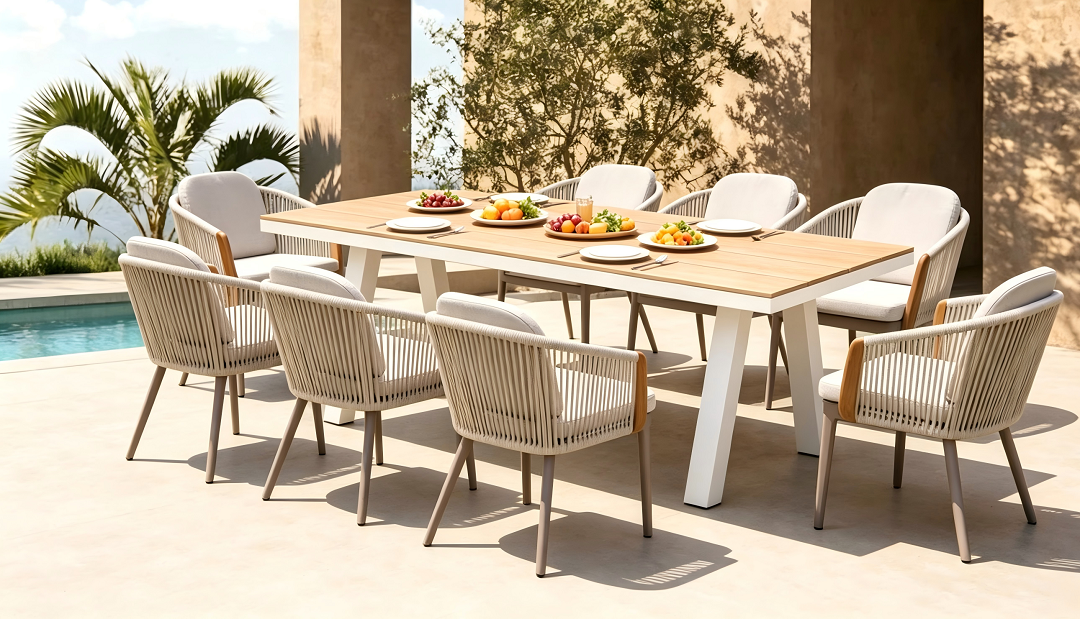
Selecting garden furniture of appropriate size requires three steps: accurately measure your outdoor space (including obstacles and access routes), apply standard clearance rules (24–30 inches walkway clearance, 100cm around dining tables), and match furniture footprint to the available area. For wholesale buyers, size accuracy directly impacts return rates, container utilization, and end-customer satisfaction. This guide covers the measurement framework, standard dimension references, and sourcing considerations that help garden furniture wholesalers make confident purchasing decisions.
For garden furniture wholesalers, size accuracy is not merely a design preference — it is a commercial decision. End customers who purchase oversized sets for compact patios generate returns, complaints, and negative reviews that damage your brand reputation downstream. Overly small furniture in spacious gardens creates a perception of poor value, reducing repeat purchase rates and retail partner confidence.
The global shift toward smaller urban outdoor spaces has made this challenge even more acute. Compact balconies, rooftop terraces, and courtyard gardens now represent a growing share of the residential market in Europe, North America, and Australia. Meanwhile, hospitality buyers — hotels, restaurants, and resorts — demand furniture that maximises seating capacity without compromising guest circulation. Accurate sizing intelligence at the sourcing stage prevents costly mismatches across both segments.
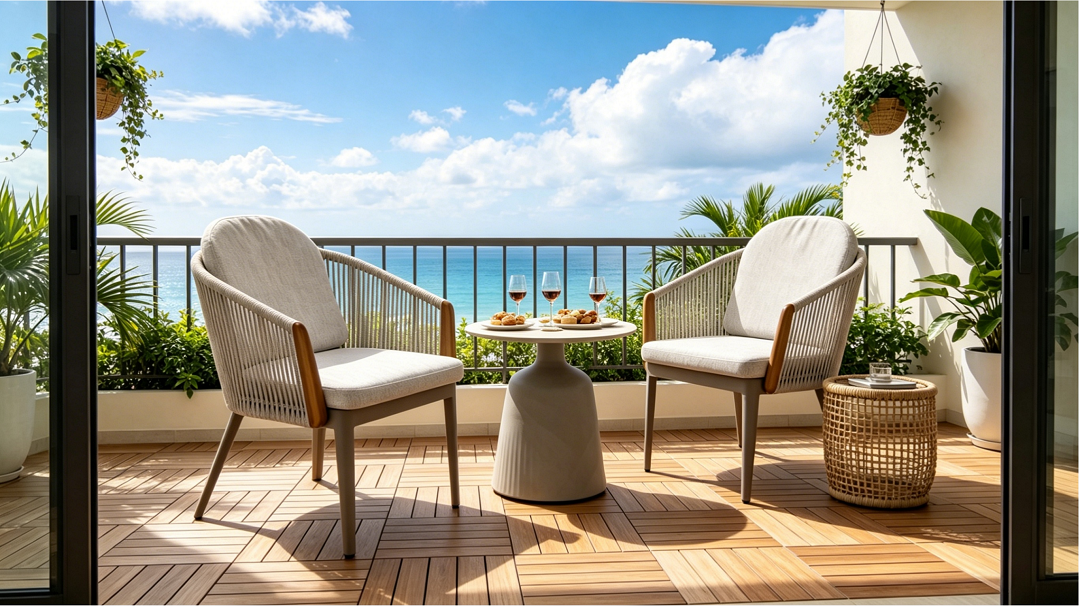
Before selecting any garden furniture, conduct a thorough site survey. You will need a measuring tape (at least 5 metres), masking tape or chalk for marking layouts, and a notepad or digital floor planner. If you are measuring on behalf of a wholesale client, request photographs and a rough sketch of the space, including door widths and any architectural constraints.
Measure the full length and width of the patio, decking area, or balcony, then note anything that cannot be moved — planters, built-in seating, railings, steps, or permanent shade structures. For balconies, measure height limitations from the floor to any overhead obstruction such as a balcony rail or overhanging branch. These constraints determine the maximum height of dining tables, parasols, and vertical planters.
Raw floor area is only the starting point. Furniture requires breathing room. The widely accepted rule is to leave at least 24–30 inches (61–76 cm) of walkway clearance around every furniture grouping so people can move freely without brushing against chairs or table edges. For dining areas, allow approximately 100 cm from the table edge to the nearest wall or boundary — this enables diners to pull out chairs and sit down comfortably.
In commercial settings such as restaurant terraces or hotel pool decks, increase clearance to 36 inches (91 cm) to accommodate service staff movement, trolley access, and emergency egress requirements.
A furniture set’s listed dimensions rarely capture the full floor space required in use. A dining table measuring 160cm × 90cm, for example, demands additional depth for chairs pushed back — typically another 75–100cm on each side. Professional buyers should always request the product footprint, an overhead outline showing the minimum floorspace required for the complete set in use.
Use masking tape or chalk to mark the footprint on site before committing to an order. This low-cost exercise prevents the most expensive mistake in garden furniture procurement: buying a set that technically fits the room but leaves no space to actually use it.
Rectangular outdoor dining tables for four people typically measure 48–60 inches (122–152 cm) in length and 28–30 inches (71–76 cm) in height. Tables measuring 6–8 feet accommodate 6–8 chairs. As a general rule, each diner requires at least 60 cm of tabletop width to eat comfortably, and round tables need a diameter of at least 100 cm for four people.
For wholesale buyers, these standard dimensions represent the highest-volume SKUs in most markets. Deviating significantly from these norms risks inventory that sits unsold because it does not align with end-customer expectations formed by years of exposure to standard sizing.
Standard outdoor dining chairs have seat widths of 45–55 cm, seat depths of 40–48 cm, and seat heights of 43–50 cm from the ground. Lounge chairs and sectionals are bulkier: a standard lounge chair measures 25–30 inches (64–76 cm) wide and 35–40 inches (89–102 cm) deep.
For commercial-grade garden furniture, CDG Furniture manufactures seating with reinforced aluminium frames that maintain dimensional integrity under intensive daily use. Seat dimensions can be customised within ±5% of standard specifications to suit specific market preferences — for example, broader seats for North American buyers and more compact profiles for European urban balconies.
A four-seater rattan bistro or dining set typically occupies a footprint of roughly 130cm before any chair movement is considered. For lounge configurations, a mid-size deck in the 10–16 foot range suits a 4–6 piece conversation set with a loveseat, two chairs, and a coffee table, while larger backyards can support distinct zones for dining and lounging.
When sourcing sofa sets for wholesale distribution, request the packed volume per set alongside the assembled footprint. Container loading efficiency depends on both dimensions — a set that assembles to 2.5m × 2m but packs into 1.2 CBM per unit offers significantly better logistics economics than one packing at 1.8 CBM.
For small patios and balconies, a bistro set — two chairs and a small table — is the smartest choice. Stackable and folding designs maximise flexibility. Wholesale buyers targeting urban apartment markets should prioritise SKUs with packed dimensions under 0.3 CBM per unit to enable economical LCL shipping and accessible retail pricing.
A 5-piece dining set (four chairs and one rectangular table) or a compact conversation set fits comfortably. These configurations represent the volume core of most garden furniture wholesale catalogues. CDG’s contract-grade aluminium dining sets in this category are designed with modular components that allow retailers to offer multiple configurations from a single SKU family, reducing inventory complexity while expanding perceived product range.
Distinct functional zones — dining, lounging, and circulation — become viable. For hospitality buyers, the sizing priority shifts from residential aesthetics to operational efficiency: how many covers can the terrace support? CDG Furniture’s project experience with hotels and restaurants across Europe and the Middle East informs furniture proportions that balance guest comfort with revenue-maximising density.
Container loading is a critical cost lever. Full Container Load (FCL) shipments offer unit shipping rates 30–40% lower than Less than Container Load (LCL), but only when your order volume fills a 20-foot or 40-foot container efficiently. Garden furniture with knock-down or flat-pack designs can increase container utilisation by 20–35% compared to fully assembled pieces — a margin that directly improves wholesale landed cost.
CDG Furniture provides detailed packing specifications including CBM per carton, pieces per carton, and recommended container loading plans for every product line. This data enables buyers to model freight costs accurately before placing orders.
Modular garden furniture — sectionals that reconfigure, tables with extendable leaves, chairs that stack — addresses the fundamental tension between fixed product dimensions and variable customer spaces. The market has shifted decisively toward modular and compact designs that meet limited urban space characteristics while preserving full-size functionality.
For wholesale buyers, modular ranges reduce SKU proliferation: one modular sofa system can serve multiple market segments, from compact balconies to expansive terraces. CDG’s aluminium and PE rattan collections are designed around this modular principle, with consistent connection systems across the range.
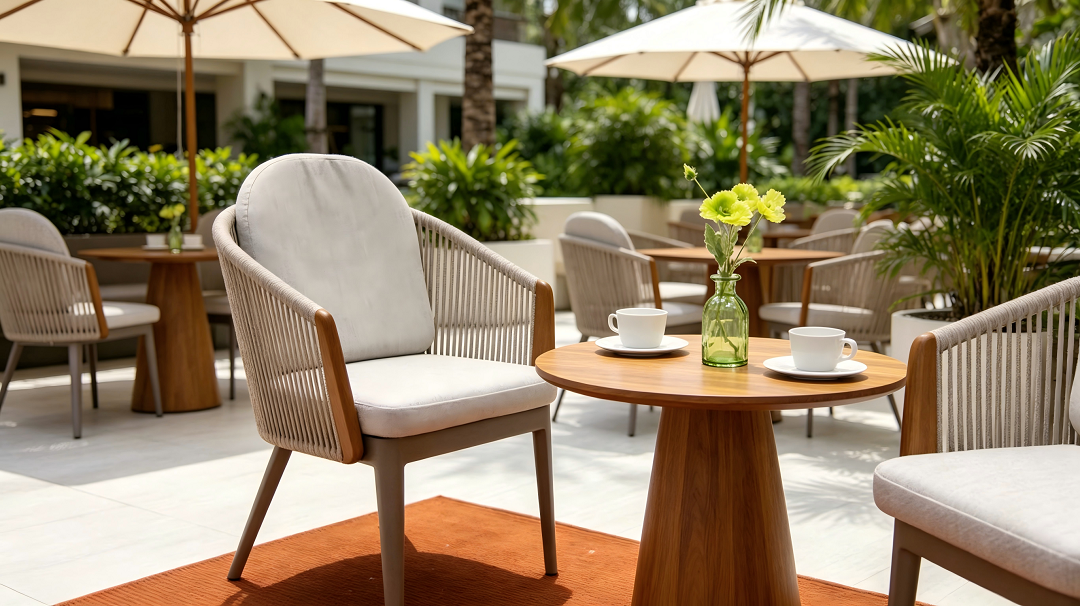
Allow at least 100 cm (39 inches) from the table edge to any wall, planter, or boundary to enable diners to sit down and stand up comfortably. For commercial hospitality settings, increase this to 120 cm to accommodate service access.
A standard 4-seater rectangular garden dining table measures approximately 120–140 cm in length and 80–90 cm in width, with a height of 74–76 cm. Round alternatives require a diameter of at least 100 cm for four people.
Leave at least 24–30 inches (61–76 cm) of walkway clearance around each furniture grouping for residential use. For commercial outdoor spaces, 36 inches (91 cm) is recommended to ensure safe and efficient circulation.
Yes. Manufacturers like CDG Furniture offer dimension customisation within standard engineering tolerances — typically ±5% on seat dimensions and table heights. Custom footprints, packing configurations, and modular connection systems are available for qualifying wholesale orders.
CDG Furniture has manufactured contract-grade garden furniture since 2006 from our Guangzhou facility, supplying wholesalers, hospitality groups, and retail chains across Australia, North America, Europe, South Africa, and the Middle East. Our 10,000-square-metre workshop and 100 skilled craftspeople produce aluminium, PE rattan, and metal garden furniture with fully documented dimensions, packing specifications, and container loading data for every product line.
For wholesale buyers, accurate sizing is not just about the product — it is about your reputation with every retail partner and end customer you serve. We provide dimension drawings, footprint templates, and packing CBM data as standard documentation with every quotation, so you can plan your orders with confidence.
Request our latest garden furniture catalogue and dimension guide to start building an order that fits your market — and your customers’ spaces — precisely.
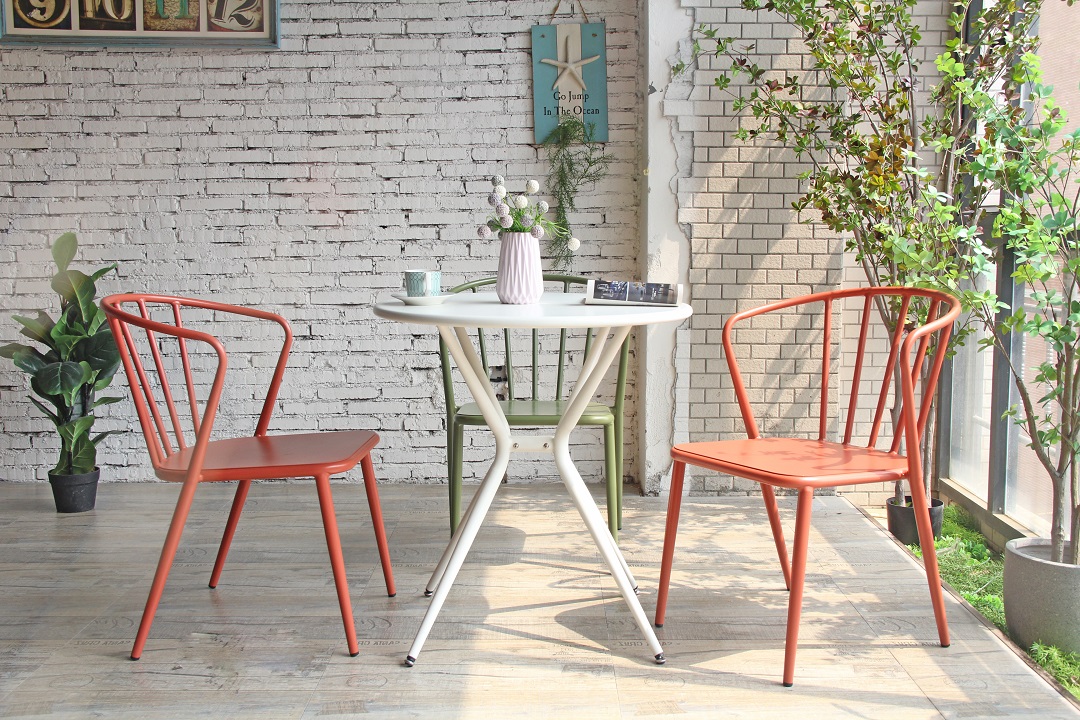
For hospitality & event professionals – choose commercial-grade seating that survives daily use, weather extremes, and rigorous cleaning cycles.
When sourcing contract-grade seating for restaurants, hotels, or event venues, buyers often face a critical choice between materials and functionality that directly impacts guest comfort and operational efficiency. In this guide, we explore the distinct advantages of commercial outdoor chairs, from space-saving metal stacking chairs outdoor to color-rich resin outdoor chairs, while addressing the durability standards that wholesale buyers depend on. Whether you are comparing frame materials, evaluating stackability for storage, or seeking OEM customization for your brand, this article provides actionable insights to help you make an informed bulk purchasing decision. We also share how CDG Furniture Group—an experienced outdoor furniture manufacturer—structures wholesale pricing and supports global hospitality projects with reliable, weather-resistant seating solutions.
When outfitting a restaurant patio, hotel terrace, or event venue, the distinction between residential and commercial outdoor chairs isn’t just about durability—it’s about survival. Home furniture typically sees a few hours of use per day. Commercial outdoor chairs face continuous use, weather extremes, and daily cleaning cycles that would wear out ordinary furniture in months.
For hospitality and food service professionals, choosing the right outdoor restaurant chairs means understanding the rigorous standards that define commercial-grade seating. These chairs must pass tests like the 500-hour salt spray test for corrosion resistance, structural load tests well beyond standard residential requirements, and UV stability testing that ensures color retention across seasons.
CDG Furniture designs every piece with these commercial demands in mind. Our products meet EN581 standards for safety, stability, and durability—certifications that matter when your reputation depends on furniture that doesn’t wobble, fade, or fail.
📌 Key Takeaway for Wholesale Buyers:
Commercial-grade outdoor chairs represent a long-term investment. While the upfront cost exceeds residential alternatives, the extended lifespan and reduced replacement frequency make them significantly more cost-effective for businesses.
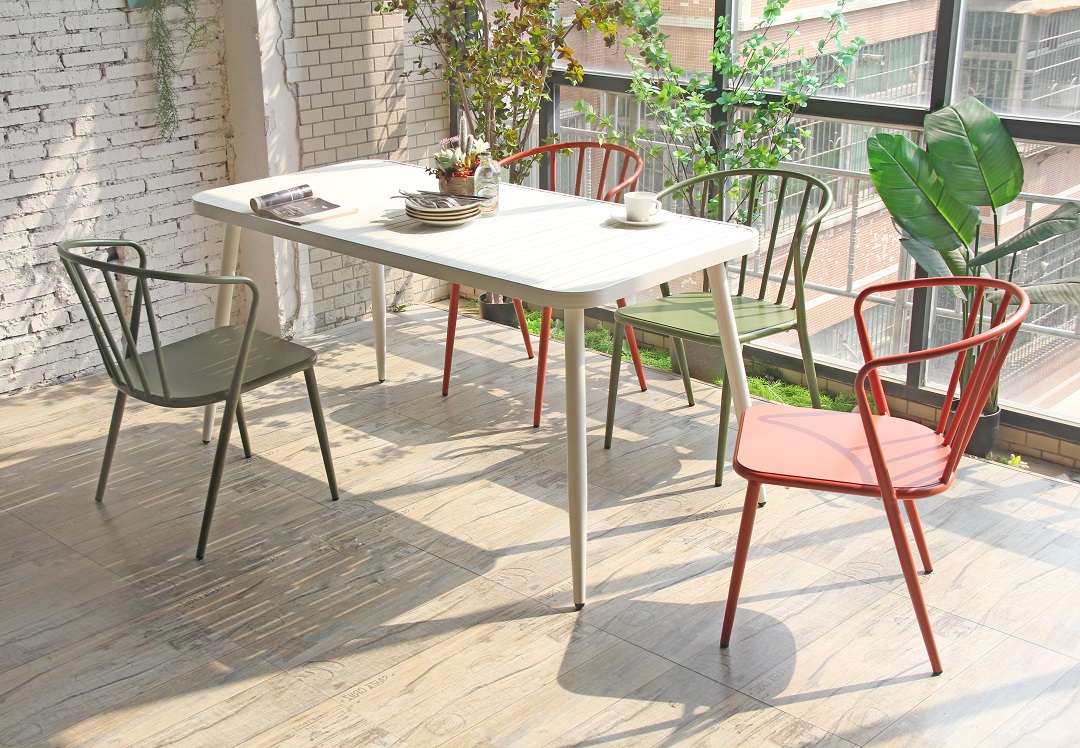
For venues with limited storage or flexible event layouts, metal stacking chairs outdoor deliver unmatched versatility. Unlike fixed seating, stackable chairs allow you to reconfigure spaces quickly—clearing a dining area for events, storing chairs overnight to prevent theft or weather damage, or expanding capacity when needed.
Industrial metal stacking chairs typically stack 4 to 8 units high, thanks to non-marring stack bumpers that prevent frame damage and floor scratching. With lightweight aluminum frames (often under 5kg per chair), staff can move large quantities without strain, making these chairs ideal for high-turnover environments like event rentals, banquet halls, and cafes.
Not all metal is equal for outdoor use. Commercial outdoor seating frames fall into two primary categories:
Aluminum alloys (6061/6063 grade) offer the best balance of strength and weight for outdoor environments. The metal’s natural oxide layer protects against corrosion, while 220°C high-temperature powder coating provides an additional barrier against UV rays, scratches, and cleaning chemicals.
CDG’s aluminum stacking chairs feature fully welded structures—eliminating bolts that can loosen over time and ensuring stability even under loads up to 200kg.
💡 Pro Tip:
For outdoor restaurants in humid or coastal regions, aluminum frames are the recommended choice. Steel frames, while durable, require careful coating maintenance to prevent rust formation.
Outdoor resin chairs have transformed commercial seating over the past decade. Modern resin (polypropylene) chairs offer a compelling alternative to metal, combining UV stabilization, waterproof properties, and extensive color options at competitive wholesale prices.
The key advantages of resin outdoor chairs for commercial settings:
Applications range from pub gardens and restaurant patios to event rentals and banquet halls. Resin folding chairs offer additional portability for venues that require seasonal storage or flexible layouts.
Selecting the right commercial outdoor seating requires understanding three critical specifications: height, weight capacity, and stackability.
For hospitality venues, dining height chairs provide the most versatility, accommodating the broadest range of guests.
Commercial outdoor chairs must support heavier loads than residential furniture. Industry standards:
CDG’s outdoor chairs meet or exceed these requirements, with fully welded aluminum frames ensuring stability without structural loosening.
Stackability directly impacts storage efficiency. Consider these factors:
Stackable chairs save approximately 70% of storage space compared to non-stackable alternatives.
CDG Furniture Group offers competitive wholesale pricing for commercial outdoor chairs through transparent, volume-based quoting.
Actual quantities vary by chair model and packaging configuration. Mixed container loading is available for wholesale buyers wanting to test multiple styles.
CDG Furniture provides comprehensive outdoor furniture wholesale services beyond standard product sales:
Our experienced design team can adapt furniture configurations to meet specific venue requirements—from beachfront resorts to high-end urban restaurants.
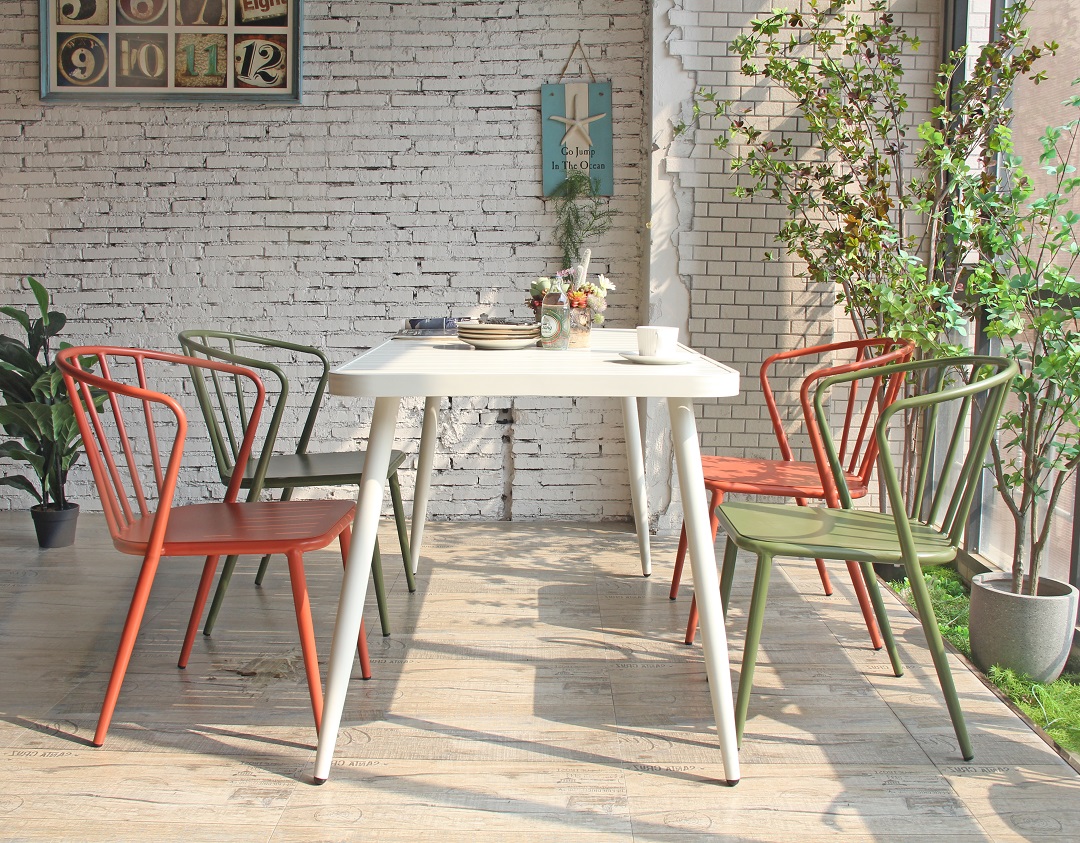
Established in 2007, CDG Furniture Group has built a reputation as a reliable outdoor furniture manufacturer serving hospitality, commercial, and event markets worldwide. Our factory employs skilled craftsmen and advanced production equipment, with daily output exceeding 15,000 chairs across our product lines.
Our products meet EN581 certification for commercial outdoor furniture—testing safety, stability, and durability under rigorous conditions. This international standard ensures your investment performs reliably across seasons and usage levels.
CDG Furniture presented its commercial outdoor chair collections at SPOGA+GAFA 2024, where global buyers recognized our innovative designs and quality craftsmanship. From hand-woven rope chairs to classic aluminum dining sets, our products combine durability with aesthetic appeal for commercial environments.
🪑 Ready to Source Commercial Outdoor Chairs for Your Venue?
CDG Furniture Group specializes in commercial outdoor chairs designed for hospitality, events, and high-traffic commercial settings. Whether you need metal stacking chairs outdoor for flexible events, resin outdoor chairs for weather-resistant dining, or custom solutions for your venue, our team is ready to help.
📞 Phone: [Your Phone Number]
📧 Email: [Your Email]
🌐 Visit: Outdoor Chairs Wholesale Page
Explore more commercial seating solutions:
Outdoor Furniture Wholesale – Complete dining sets for hospitality
Hot Sales Tables and Chairs – Best-selling commercial furniture
CDG Furniture Group – Your trusted partner for commercial outdoor seating worldwide.
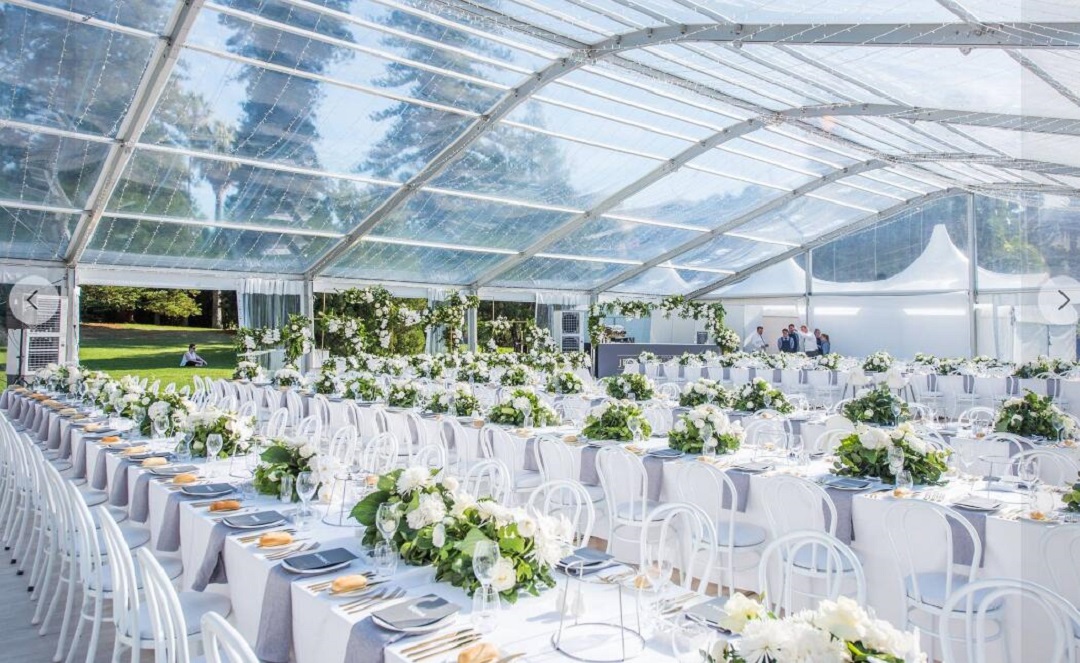
From a 200‑guest rooftop wedding to a 1,000‑delegate corporate conference, the furniture you place in the room shapes the entire experience. Guests remember comfort, elegance and flow long after the last speech is over — which is exactly why smart event furniture wholesale decisions matter. For event rental companies, wedding planners, banquet halls and conference organisers, sourcing the right tables and chairs at scale is the difference between a seamless event and a logistical headache.
This guide breaks down the categories of chairs for events, how to plan quantities for 100 to 1,000 guests, and how working with a manufacturer partner like CDG keeps costs low and quality high — whether you’re buying **event furniture for sale** for your venue or building a rental fleet.
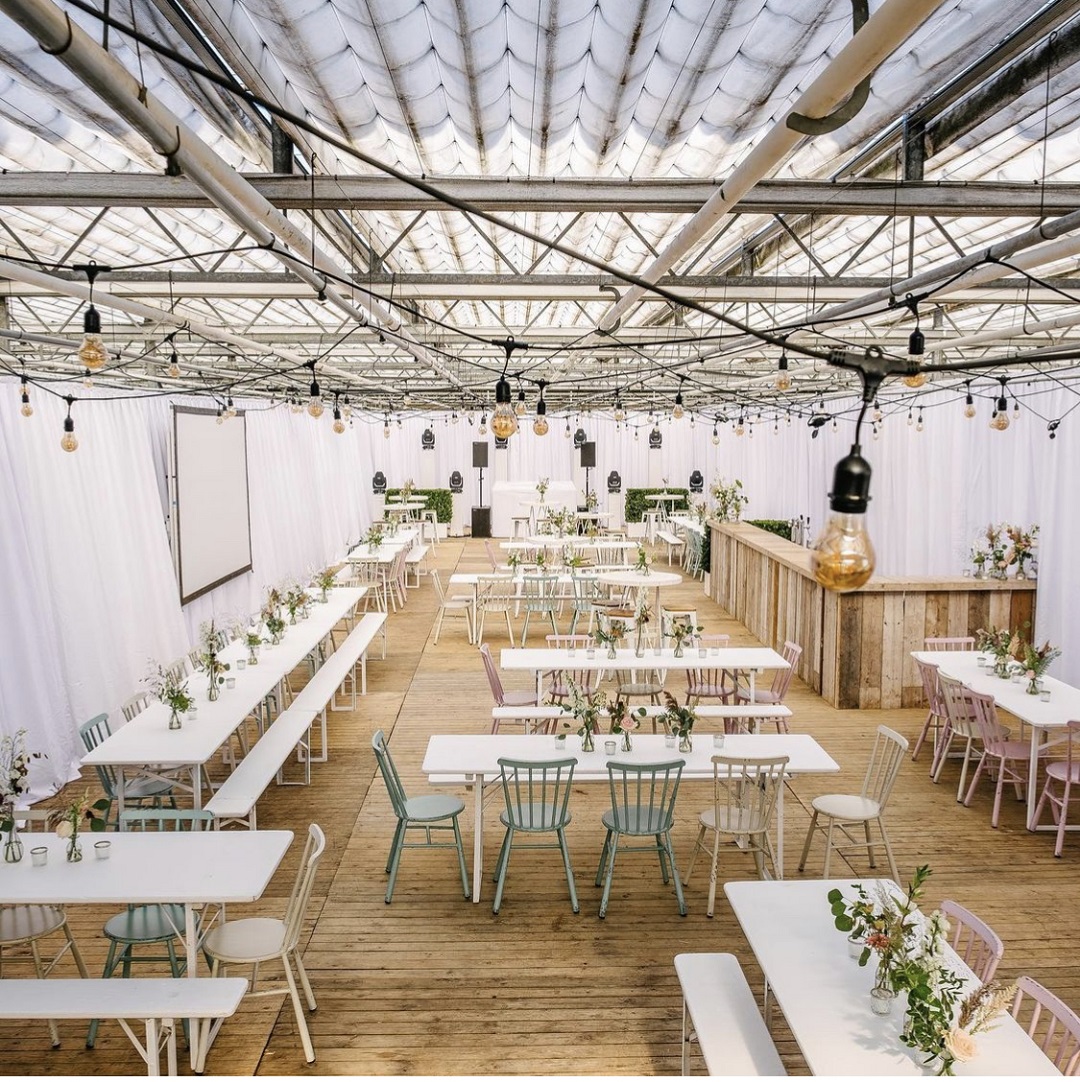
Every event layout is built from the same core elements. Understanding each one helps you buy the right mix rather than overstocking.
At CDG, our range spans stackable bistro chairs, banquet and wedding chairs, restaurant tables, high‑top party tables, folding bistro tables and modular table top/base systems — all built to survive years of heavy commercial use. Explore our full event furniture collection to view available wholesale options for your business.
The most important quality in an event chair is how it behaves at scale. A chair that stacks is worth its weight in gold for rental operators, because it cuts storage footprint, truckload count and setup labour.
Stackable event chairs are the default choice for conferences, banquets and large receptions. Lightweight yet robust frames — often aluminium or powder‑coated metal — allow staff to carry several at once and nest them compactly for storage. This matters enormously when you’re moving 500 chairs out of a van and into a ballroom before the clock starts.
Banquet chairs prioritise elegance and comfort for long seated events. With padded seats, curved backs and premium upholstery options, they create the refined look guests expect at weddings and formal dinners — while remaining tough enough for year‑round rental rotation.
Weddings demand more than function; they demand atmosphere. This is where wedding chairs wholesale becomes a branding exercise for your rental business. Offering chairs in ivory, white, champagne, black and custom fabrics lets brides match their colour palette exactly. A matching banquet tables and chairs package gives planners a one‑stop solution — they book the full set from one supplier, receive it as a coordinated collection, and return it the same way. For venues, being able to say “yes, we have the exact chair and table to match your theme” is a powerful conversion tool. Check our banquet chairs wholesale catalog for themed colour options.
Table shape drives both aesthetics and guest flow.
Because event needs change, flexibility wins. CDG’s table tops and bases are designed to be combined — a sturdy commercial base can carry round, square or rectangular tops, so your fleet adapts to the event in front of you instead of forcing you to buy new furniture each time.
Getting quantities right is a formula, not a guess. The universal rules: one chair per guest, plus a 5–10% buffer for unexpected attendees; one 60‑inch round table per 8 guests; and one high‑top cocktail table per 4–5 guests.
| Guests | Chairs (incl. 10% buffer) | Round Tables (60″, 8‑seat) | Rectangular Tables (6‑8 ft) | High‑top Cocktail Tables |
|---|---|---|---|---|
| 100 | 110 | 13 | 13 | 20‑25 |
| 300 | 330 | 38 | 38 | 60‑75 |
| 500 | 550 | 63 | 63 | 100‑125 |
| 1,000 | 1,100 | 125 | 125 | 200‑250 |
The 10% chair buffer is critical — a few surprise guests or a dropped chair mid‑event should never leave you short. Mixing round tables for dining with high‑top tables for social zones lets you serve more guests per square metre and keeps the room flowing.
For rental companies, the real cost of furniture lives in storage and transport, not the purchase price. Prioritise pieces that reduce both:
This is where buying from a manufacturer instead of a distributor pays off. When you source event furniture for sale directly from CDG, you can specify the stack height, finish, fabric and even packaging designed for efficient freight — so the product is engineered for your logistics from day one.
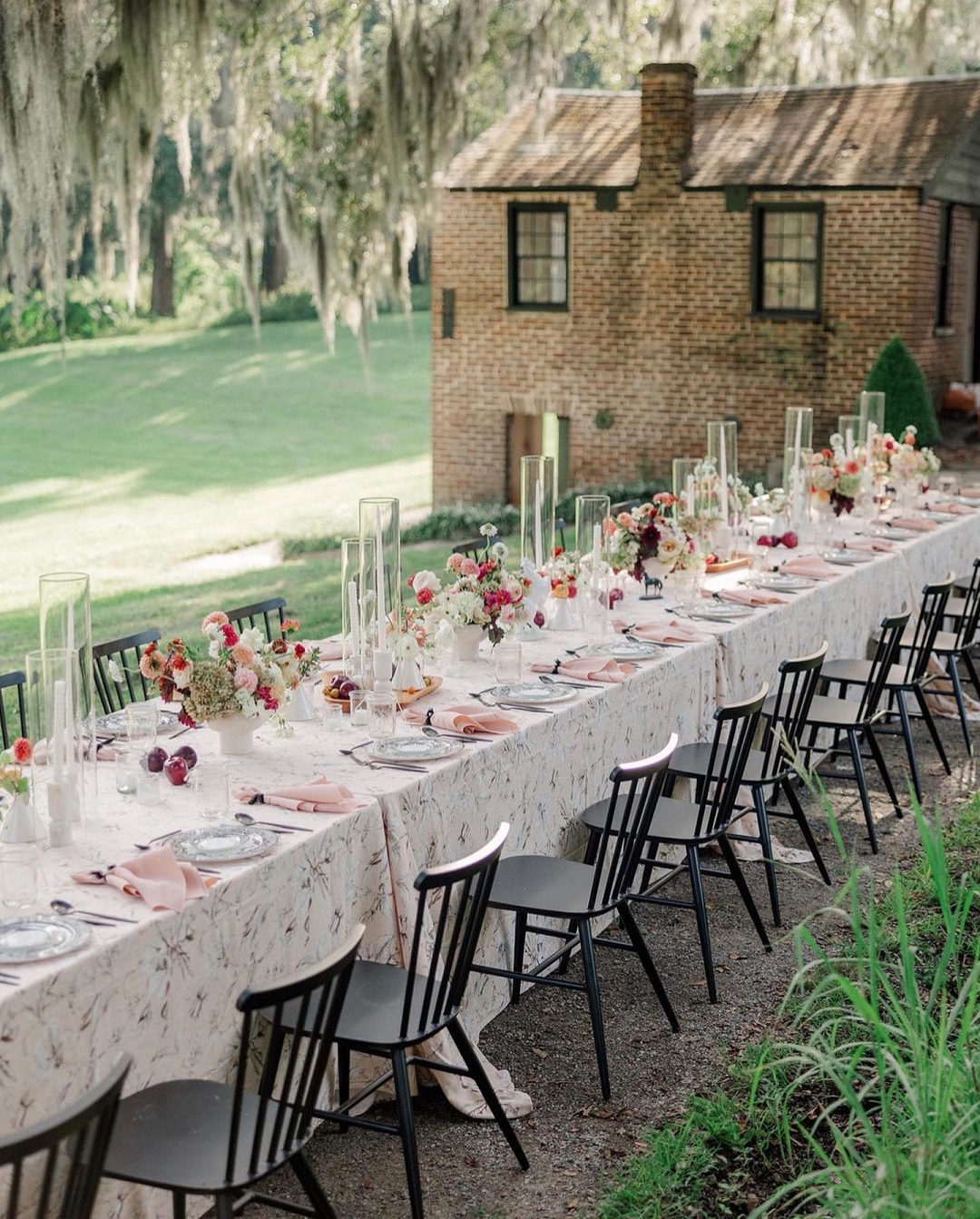
CDG Furniture Group is an Event Furniture Manufacturer with two decades of experience supplying hospitality and event furniture worldwide. We understand that rental companies and venues operate on tight margins and tighter timelines. That’s why we build our chairs and tables for commercial‑grade durability, and why we support our B2B partners with more than just products:
Whether you’re a new rental startup buying your first 100 chairs or an established venue scaling to a 1,000‑guest capacity, our team treats your event schedule as our own. Our goal is simple: help you furnish unforgettable weddings, banquets and conferences — while keeping your storage, labour and replacement costs low.
Ready to build or expand your fleet? Browse our banquet tables and chairs, stackable event chairs and high‑top party tables, and contact our team for a wholesale quote tailored to your next event season. Let’s make sure your chairs are never the thing your guests remember — and your bottom line is always one you love.
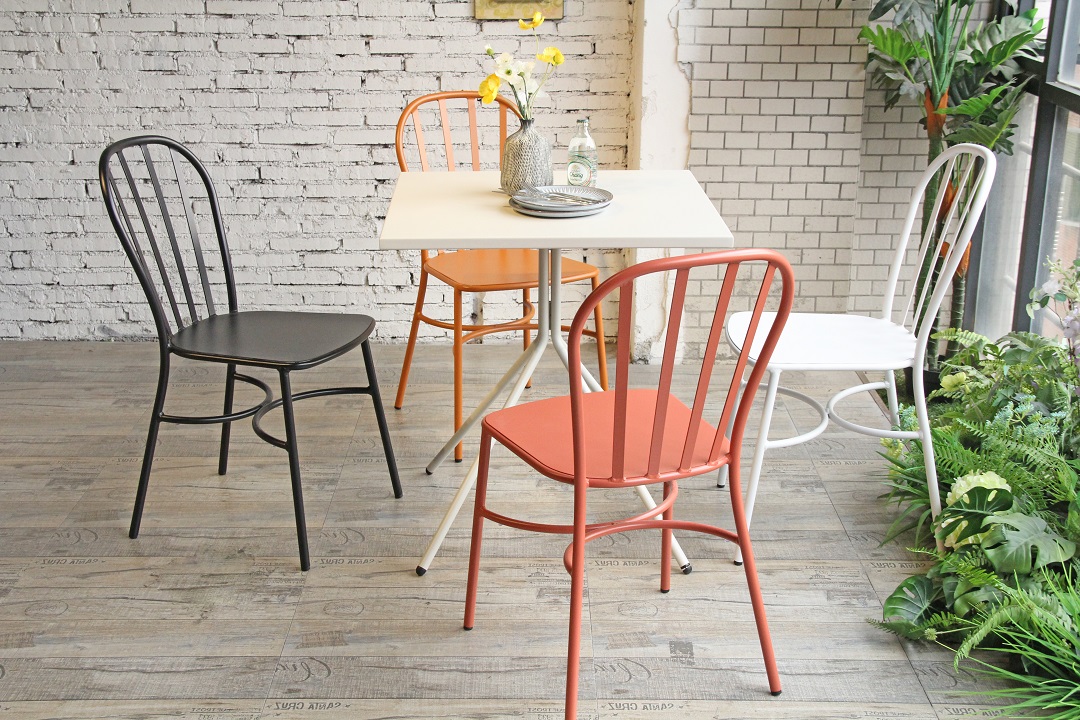
For outdoor restaurant operators, your patio, rooftop or street-side dining zone is far more than supplementary seating – it is a high-yield revenue center that can drive foot traffic, boost average dwell time and lift annual profit margins by 30% or more when furnished correctly. But as 70% of today’s diners prioritize patronizing brands with clear environmental responsibility records, and operators grow tired of replacing rusted steel frames or frayed wicker seating after just 6 months of heavy daily use, the industry is shifting rapidly to a solution that solves both pain points at once: recyclable aluminum outdoor furniture.
As a 20+ year professional commercial outdoor furniture manufacturer based in Guangzhou, CDG Furniture has supplied high-performance aluminum furniture to hospitality clients across Europe, North America, Australia, the Middle East and South Africa, with 763 completed commercial projects for outdoor restaurants, rooftop bars and boutique hotel patios to date. This guide breaks down exactly why recyclable aluminum outdoor furniture is the highest-ROI investment for your foodservice venue, from its unmatched durability for high-traffic use to its zero-upkeep operational benefits, and fully circular, ESG-aligned end-of-life recycling value.
Unlike residential-grade outdoor furniture designed for 2-3 hours of daily private use, outdoor restaurant seating endures dozens of moves, constant spills of food, oil and acidic beverages, heavy patron loads, and nonstop exposure to harsh sun, rain, wind and even coastal salt spray every single day. Recyclable aluminum outdoor furniture eliminates almost all common premature failure points that force operators to replace low-quality furniture every 2 to 3 years.
All CDG’s aluminum hospitality furniture features corrosion-resistant thick-gauge aluminum frames with commercial-grade welds, and many of our lines carry EN581 certification – the strict European furniture safety standard – with a tested weight capacity of up to 150kg (330lbs) to support nonstop high-traffic use. Unlike steel frames that rust through within 2 years in wet or coastal climates, or solid wood patio sets that warp, crack and rot after repeated exposure to moisture, our powder-coated aluminum lines resist scratching, fading and structural loosening for 10+ years even in extreme weather conditions. We reinforce all high-stress joinery points on every frame, eliminating the wobble and loosening that leads to early furniture replacement for 60% of unvetted commercial outdoor furniture buyers.
This extreme durability directly translates to major revenue flexibility for your venue. Our stackable aluminum bistro chairs and portable outdoor tables can be rearranged in minutes, letting you shift your patio layout from 40-seat weekend brunch service to a 60-seat evening cocktail reception or private event without paying for extra rental furniture, lifting your outdoor space’s annual revenue potential drastically. Unlike disposable short-life furniture, well-maintained aluminum outdoor furniture also retains strong resale or repurposing value if you refresh your venue’s concept down the line, boosting your total return on investment far beyond that of cheaper, low-quality alternatives.
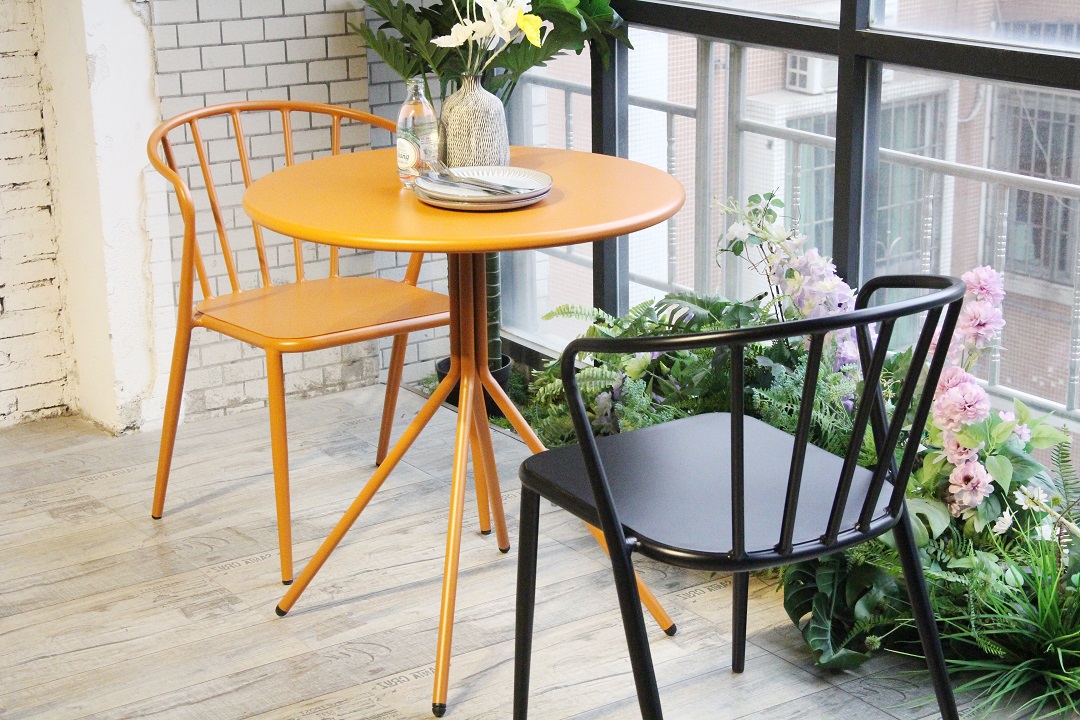
One of the biggest hidden cost drains for outdoor restaurant operators is the constant labor and material spent on furniture upkeep: sealing wooden frames every quarter, treating rust spots on steel tables, or replacing loose wicker strands after every busy weekend. Recyclable aluminum outdoor furniture removes all of these recurring maintenance tasks entirely.
The non-porous powder-coated finish on our aluminum frames repels stains from coffee, sauce and drink spills completely, so you can wipe down all furniture surfaces in seconds with standard restaurant sanitizers, no special cleaning products or post-cleaning treatment required. Unlike porous wood that traps bacteria and food residue in crevices, fully sealed aluminum surfaces meet strict commercial hygiene standards for foodservice operations, reducing your front-of-house cleaning labor hours by as much as 40% compared to timber or woven wicker patio sets.
Even for venues located directly on the coast, our salt-tested aluminum frames never develop the orange rust stains that bleed onto patio floors or ruin patron clothing, eliminating the need for monthly rust prevention treatments and annual repainting work. For seasonal venues that close for part of the year, our lightweight stackable aluminum chairs can be stacked and stored in compact on-site storage with zero winterization work required, no need to purchase custom fitted weather covers or move heavy furniture indoors to avoid cold damage.
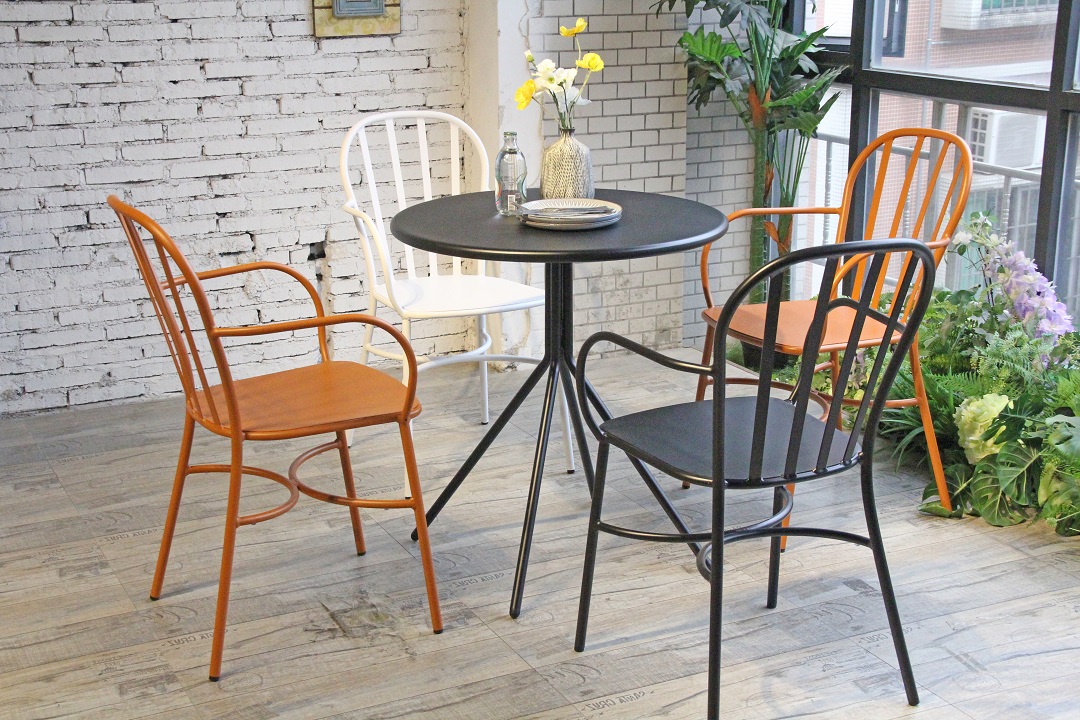
Sustainability is no longer an optional marketing perk for modern hospitality brands – it is a non-negotiable expectation for over 70% of global diners, who actively choose to spend more at venues that demonstrate clear environmental accountability. Unlike mixed-material outdoor furniture that cannot be disassembled and ends up 100% sent to landfill at the end of its short lifespan, high-quality aluminum is infinitely recyclable, with zero loss of structural or material quality during the melting and reforming process.
Every frame we produce at CDG can be fully 100% recycled at the end of its 15+ year service life, no component separation or specialized processing required. For operators working to hit ESG and zero-waste targets for their brand, investing in recyclable aluminum outdoor furniture immediately aligns your front-of-house operations with global circular economy standards, without sacrificing style or guest comfort.
Unlike eco-friendly alternatives that force you to compromise on design, our full recyclable aluminum outdoor furniture lineup supports fully customizable finishes: you can select from matte black, vintage weathered tones, soft neutral pastels or custom brand-matched powder coat colors to fit any venue aesthetic, from a retro French bistro patio to a sleek modern rooftop bar. Our modular aluminum sofa sets, stackable bistro chairs and portable outdoor dining tables are already in use at hundreds of zero-waste certified restaurants globally, helping these venues showcase their sustainability commitments to guests with every outdoor seating touchpoint.
At CDG Furniture, we have 10,000 square meters of dedicated production workshops, 100 skilled artisans, and a full commercial furniture design team that can support custom sizing, finish adjustments and bulk wholesale orders for outdoor restaurant operators of all sizes. Our full line of recyclable aluminum outdoor furniture has passed strict third-party tests from BV and SGS, and we offer long-term after-sales support including replaceable glides and spare frame components to extend the service life of your investment even further.
If you are ready to cut your long-term furniture replacement costs, meet your sustainability targets and unlock higher revenue from your outdoor dining space, contact our team today to request a custom product catalog, wholesale bulk pricing quote, and free layout consultation for your venue’s patio project.
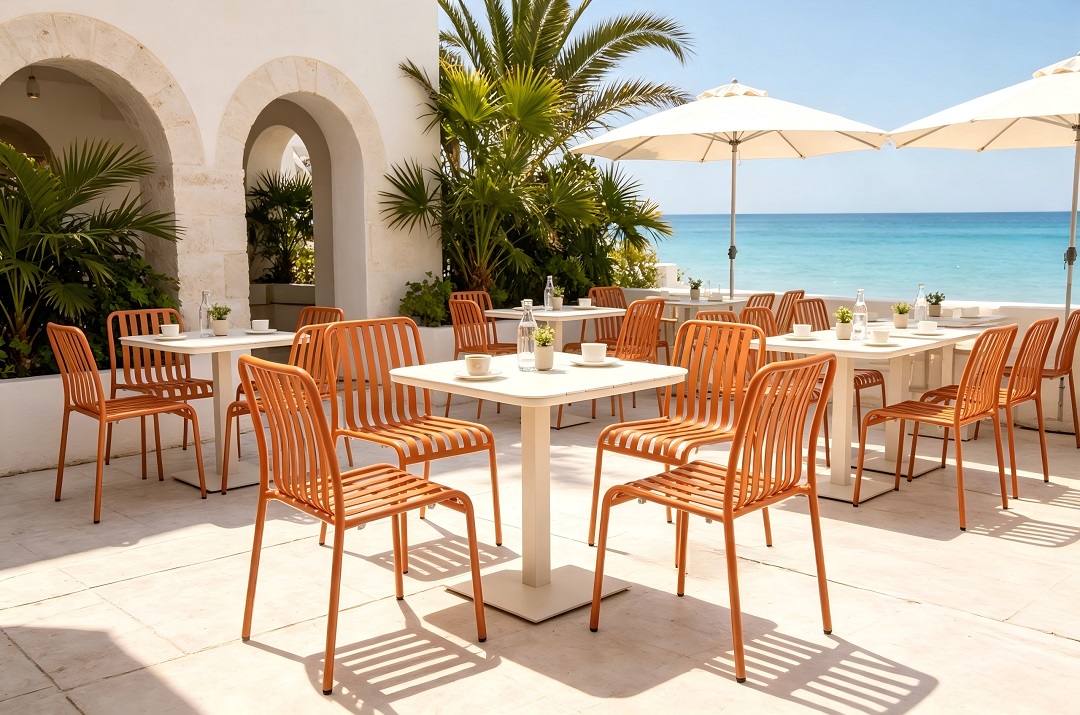
For an outdoor restaurant owner, your patio is not just extra seating—it’s a dynamic revenue center, a powerful brand statement, and a critical factor in guest satisfaction. However, the journey from an empty terrace to a bustling outdoor oasis hinges on one pivotal decision: choosing the right Weather Resistant Metal Furniture.
The al fresco dining market is more competitive than ever. To thrive, you need furniture that can withstand the relentless assault of sun, rain, and high traffic, all while maintaining the aesthetic appeal that keeps guests coming back. This guide will explore why metal furniture is the superior choice for outdoor restaurants and how to make a strategic investment that drives long-term profitability.
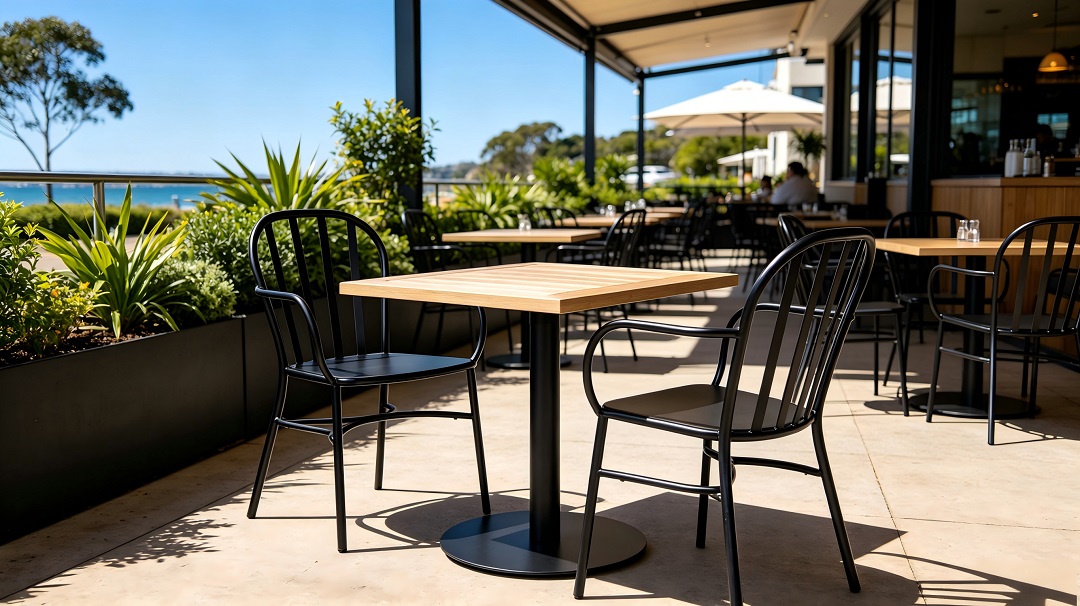
Outdoor furniture faces a harsh reality vastly different from controlled indoor settings. Exposure to UV rays, rain, humidity, and wind can cause significant damage, leading to fading, warping, rust, or even decay. Without proper protection, your furniture loses its functionality and appeal far sooner than expected, directly impacting your guest experience and bottom line.
When choosing materials for your restaurant patio, durability, weather resistance, and ease of maintenance are the key criteria. This is where high-quality metal furniture excels. Unlike wood that can rot or crack, or plastic that becomes brittle, metals like aluminum and galvanized steel are engineered for longevity.
While any metal furniture might have a coat of paint, true weather resistance lies beneath the surface. The key to superior protection is often in the pre-treatment process. For instance, galvanization is a process where the steel is coated with zinc to increase resistance to corrosion and rust. This provides what is known as “sacrificial protection,” where the zinc layer corrodes before the underlying steel, protecting the structure even if the surface is scratched.
Following this, a high-grade, UV-resistant powder coating is essential. This finish provides a tough, wear-resistant layer that protects against the elements. For commercial-grade products, look for furniture that undergoes rigorous processes like E-coating (electrophoresis) before powder coating, which guarantees near 100% rust-proof performance, even in high-humidity or coastal environments. This level of protection is the hallmark of commercial-grade furniture, designed to meet the demands of high-traffic environments.
When selecting metal furniture, the choice primarily comes down to aluminum and steel. Each has unique advantages for outdoor restaurant use.
Aluminum has emerged as a mainstream choice for modern commercial outdoor seating due to its inherent benefits. Its primary advantage is that it is naturally rust-resistant. It handles sun, rain, and humidity, remaining stable long-term in coastal, rainy, or high-UV environments. Furthermore, aluminum is lightweight yet durable, making it easy for staff to rearrange tables and chairs for different seating configurations, which is a significant operational benefit. For example, a high-quality aluminum chair can weigh as little as 2-3kg but can still support up to 150kg, showcasing its excellent strength-to-weight ratio.
Why it’s ideal for restaurants:
Steel is often the material of choice for furniture that requires maximum strength and stability. It’s typically heavier than aluminum, which can be an advantage in windy locations as it is less likely to be blown over. High-quality steel furniture features a robust frame with an E-coating and additional powder coating to ensure it is weatherproof and rust-resistant.
Why it’s ideal for restaurants:
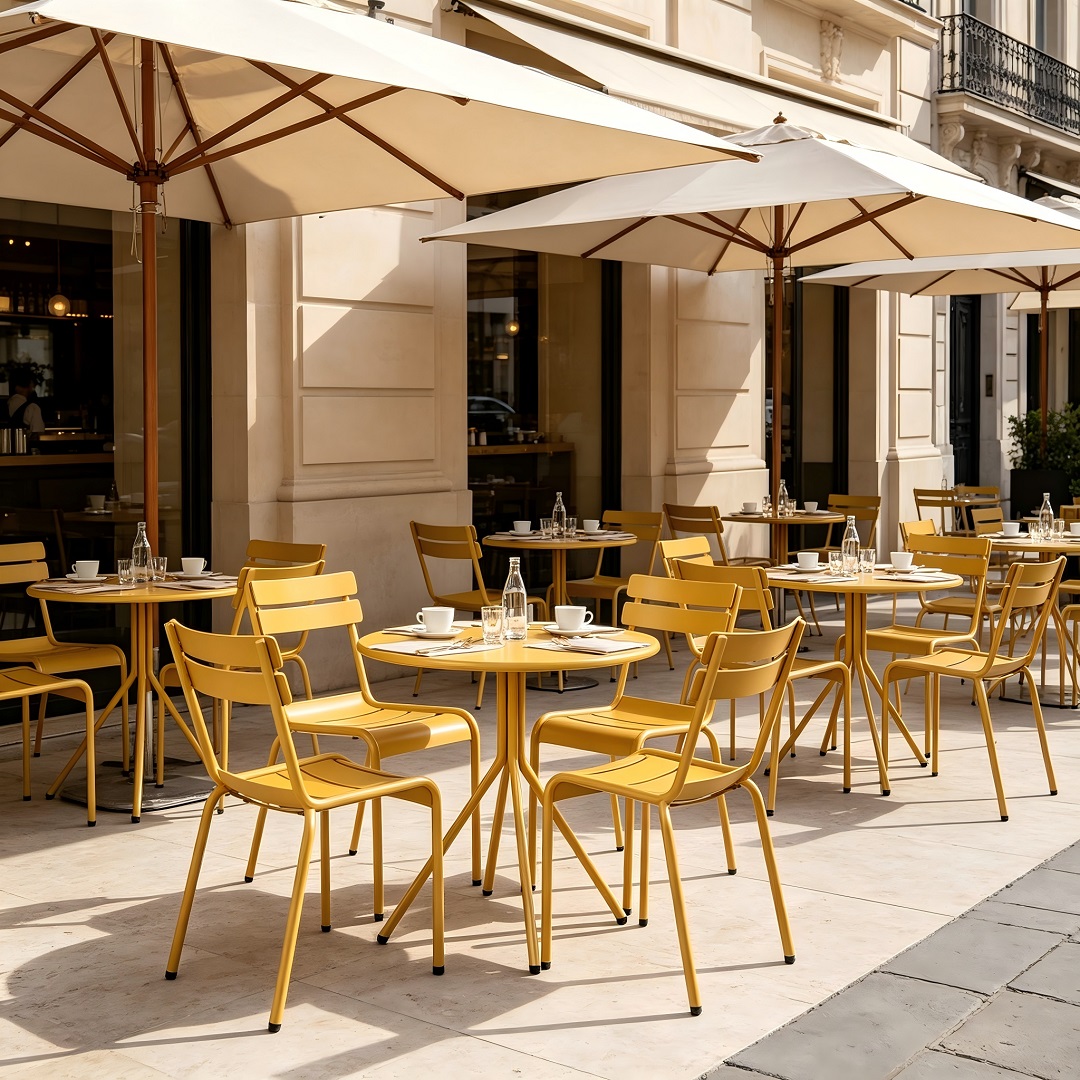
Investing in commercial-grade furniture is crucial for restaurant success. It is not just about buying a table and chair; it is about ensuring your investment can withstand the rigors of daily service and changing weather conditions. Here are key features to look for:
As a leading commercial furniture manufacturer with over 20 years of experience, CDG Furniture has established a strong reputation in the global market. Our products are trusted by renowned brands like KFC, Starbucks, and Hilton Group, a testament to our commitment to quality and reliability.
We specialize in providing professional commercial furniture solutions, covering multi-dimensional needs such as catering, leisure, and outdoor activities. Our metal garden furniture series showcases modern style with a rugged texture, while our retro metallic texture series, made of aluminum, is celebrated for its excellent weather resistance and aesthetic balance. We don’t just sell furniture; we offer one-stop commercial furniture customization solutions, empowering the entire process from material selection to implementation.
Choosing the right weather-resistant metal furniture is one of the most critical decisions you will make for your outdoor restaurant. It’s a strategic investment that enhances your brand, improves customer satisfaction, and ensures long-term operational efficiency. By investing in commercial-grade aluminum or steel furniture with advanced protective coatings, you are not just buying tables and chairs—you are building the foundation for your restaurant’s enduring success.