
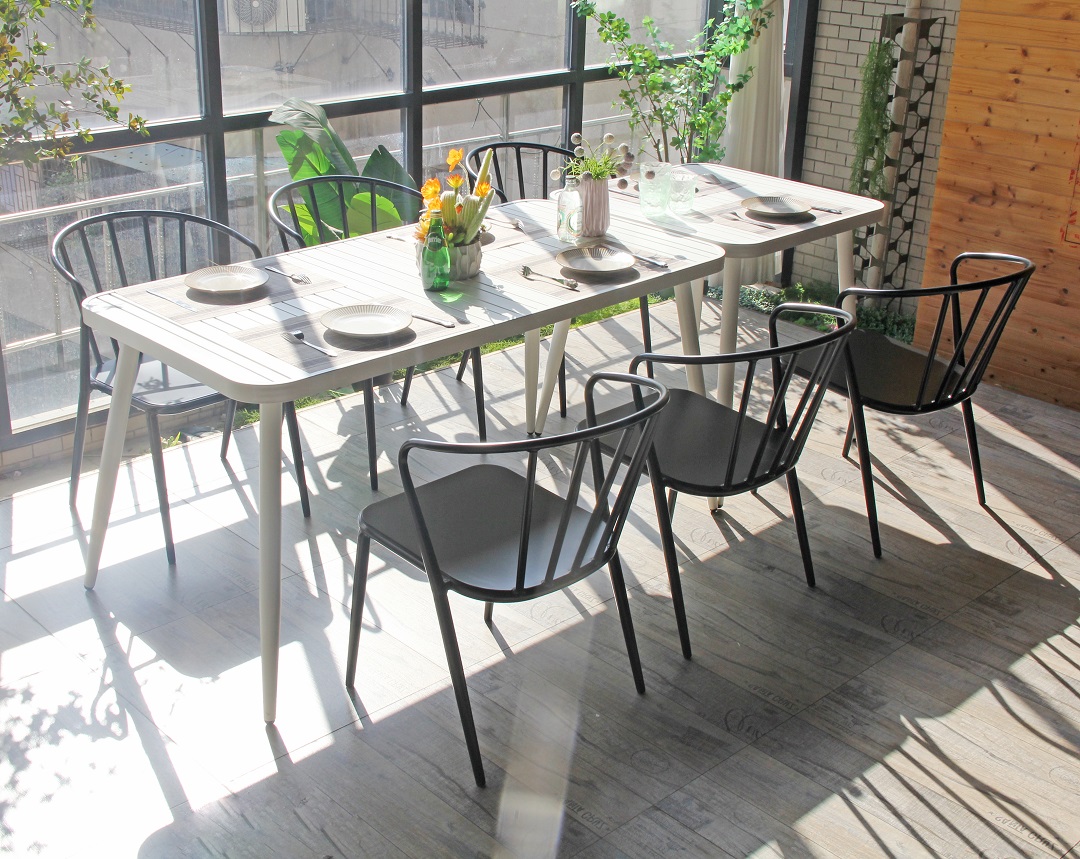
A hotel terrace, a poolside restaurant, a rooftop bar — these are no longer secondary spaces. They are revenue centres, brand touchpoints, and the first thing a guest photographs. For garden furniture wholesalers, this shift has changed the brief. You are no longer supplying chairs and tables. You are supplying a commercial asset that must survive daily repositioning, coastal salt air, year-round UV exposure, and the operational reality that nobody on the hotel team has time to wax, oil, or baby the furniture.
That is the context in which commercial grade aluminum garden furniture has become the default specification for hospitality projects worldwide. But “commercial grade” is one of the most loosely used phrases in the industry. This article breaks down what it actually means in verifiable numbers, so wholesale buyers can specify with confidence, protect margin, and reduce the warranty claims that quietly erode profitability.
The difference between residential aluminum garden furniture and true commercial grade is not a label. It is wall thickness, alloy grade, coating performance, and test evidence.
A residential dining chair often uses 1.0–1.2 mm aluminum tube. That is acceptable for a homeowner who moves the chair twice a season. It is not acceptable for a hotel restaurant where the same chair is stacked, dragged, and sat on by hundreds of guests a week. Commercial-grade aluminum frames should start at 1.5 mm for visible structural components and move to 2.0 mm or above for load-bearing parts such as chair frames, table bases, and lounger rails. Alloy selection matters too: 6061-T6 or 6063-T5 tempers are the baseline for contract furniture, not generic recycled aluminum.
The testing standards are equally specific. Contract seating for European hospitality should reference EN 581-1/-2, which requires outdoor seating to withstand 100,000+ seat fatigue impact cycles without structural failure. In North America, ANSI/BIFMA X5.4 and ASTM F1858 are the relevant contract-grade references. For coating performance, commercial-grade powder-coated aluminum should exceed 1,000 hours of neutral salt spray (ASTM B117) for coastal and poolside projects, and achieve Blue Wool 7+ or 500–1,000 hours of UV exposure (ASTM G154) with ΔE ≤ 2 for colour stability.
If a supplier cannot put those numbers on paper, “commercial grade” is a marketing word, not a specification.
Aluminum is not the cheapest frame material per kilogram, but it is the most practical for hospitality when specified correctly. It does not rust, it keeps freight costs manageable because it is lightweight, and it accepts powder-coat finishes that can match brand palettes in matte, textured, or wood-grain effects.
Compared with powder-coated steel, aluminum eliminates the weld-point rust risk that appears within the first season in humid or coastal climates. Compared with solid teak, it requires no seasonal oiling and does not crack under thermal cycling. Compared with PE rattan on a steel frame, a full-aluminum construction removes the dissimilar-metal corrosion that shortens service life in pool environments.
The trade-off is that aluminum is only as good as its wall thickness and coating. A beautifully finished 1.0 mm aluminum chair will still flex, fatigue, and fail in a contract setting. Wholesale buyers should treat wall thickness and salt-spray rating as the two non-negotiable gates in supplier qualification.
For wholesalers sourcing aluminum garden furniture for hotels and restaurants, the purchase order should read like an engineering document, not a catalogue description. The following checkpoints separate a five-year asset from a one-season liability:
Specify 6063-T5 or 6061-T6 alloy. Require minimum 1.5 mm wall thickness on visible tube and 2.0 mm on structural components. Welds should be full-penetration, ground smooth, and fully covered by coating — no exposed seam where moisture can wick into the tube.
Minimum 60–80 μm film build. For coastal or poolside projects, demand ≥1,000 hours neutral salt spray. For high-UV markets such as the Middle East, Australia, and Southeast Asia, require Blue Wool 7+ or equivalent xenon-arc UV data, not a generic “UV resistant” claim.
Solution-dyed acrylic or equivalent performance fabric should be rated to 2,000+ hours UV exposure (ISO 105-B02); generic coated polyester degrades visibly within 500–800 hours. Quick-dry reticulated foam and antimicrobial treatments are operational necessities for restaurants and resorts where cushions stay outdoors.
Stainless steel or zinc-plated fasteners, plastic glides that do not stain decking, and stacking bumpers that protect powder coating during daily handling.
EN 581 test reports, BIFMA X5.4 documentation, ISO 9001 factory certification, and material traceability for the aluminum billet. A supplier who can provide these is a supplier who understands contract furniture.
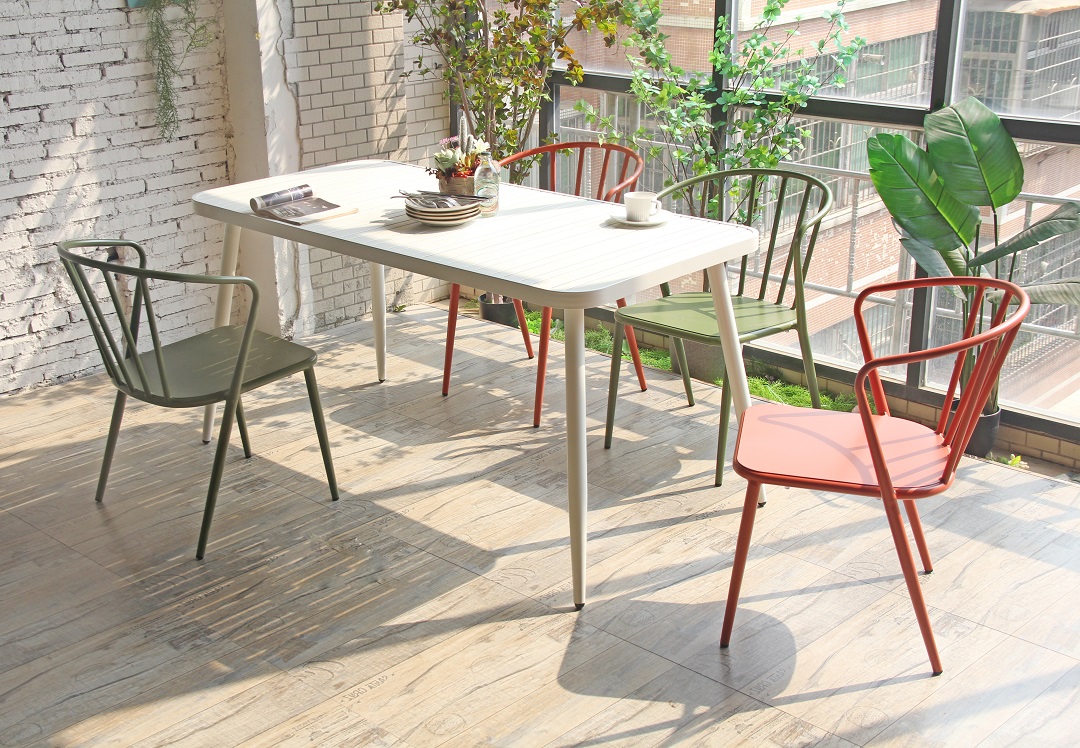
Hospitality buyers evaluate furniture through an operational lens. A restaurant manager wants chairs that stack 28–40 pieces per stack and can be moved by one staff member. A resort housekeeping team wants slings and cushions that can be power-washed or replaced without retiring the whole frame. A procurement director wants the same finish colour across three properties, three years apart.
This is where full-aluminum commercial furniture outperforms mixed-material alternatives. All-aluminum dining chairs and stacking chairs are light enough for one-person handling but stiff enough to avoid the “wobbly chair” complaint that plagues thinner residential frames. Replacement slings, modular cushion covers, and stackable/nestable designs extend the service life of the frame and reduce total cost of ownership.
The design language of hospitality outdoor furniture has also shifted. The indoor-outdoor seamless trend documented at CIFF 2026 is not a residential fad; it is a commercial strategy. Hotels and restaurants are reconfiguring terraces as flexible revenue zones, using modular upholstered seating that looks at home in a lounge but is engineered for rain, UV, and thermal expansion. For wholesalers, this means the aluminum frame is increasingly hidden beneath performance textiles and quick-dry foam — but the frame specification becomes more important, not less, because the furniture is being used harder and expected to look softer.
A low-spec aluminum chair is cheaper per unit and more expensive per year. The hidden costs arrive as warranty claims, return freight, labour for replacing failed pieces, and the reputational damage of a hotel client who cannot open a terrace because half the chairs are loose.
A commercial-grade specification changes the commercial equation. It reduces after-sales workload, supports a premium price position, and allows wholesalers to sell into coastal, tropical, and cold-climate markets without regional restrictions. It also improves container economics. Knock-down and stackable engineering at the better factories now compresses outer carton volume by 40–55% compared with traditional fully assembled packaging, directly reducing landed cost per unit.
MOQ logic in aluminum hospitality ranges typically starts at 100–300 sets per SKU for aluminum dining and stacking collections, with mixed-container loading available for buyers who need to spread risk across multiple models. The wholesalers who win hospitality accounts are the ones who treat MOQ as a container-planning exercise, not a barrier.
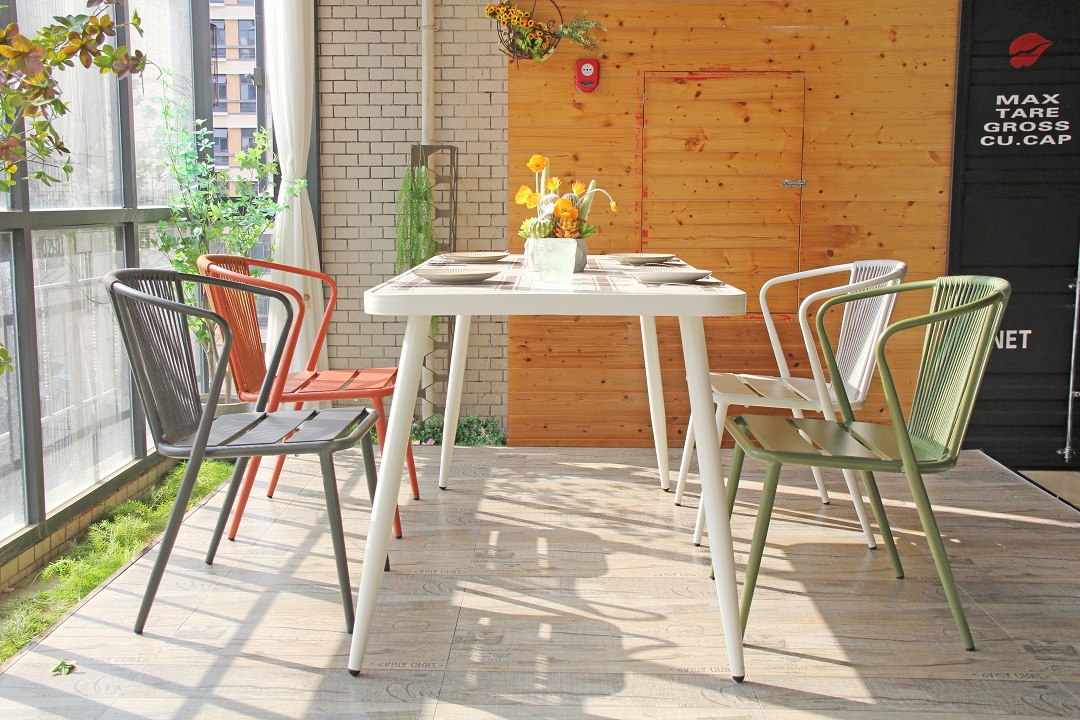
This is the context in which CDG Furniture Group operates. With more than 20 years in commercial and outdoor furniture, a 20,000+ m² production facility, and a 150-person semi-automated line, CDG manufactures fully powder-coated aluminum dining chairs, stacking chairs, tabletops, and complete outdoor dining sets for bulk wholesale supply. The company’s commercial portfolio includes collaborations with foodservice and hospitality brands such as KFC, Starbucks, Hilton Group, and InterContinental Group, and it launches 500+ new designs annually across outdoor, garden, and dining categories.
For wholesale buyers evaluating any commercial aluminum supplier — CDG included — the right next step is not to request a catalogue. It is to request the specification file: alloy and wall-thickness data, powder-coat salt-spray and UV reports, EN 581 or BIFMA test summaries, stacking and container-loading plans, and a sample from the actual production run. A manufacturer who can answer those questions in writing is a manufacturer equipped for hospitality. A manufacturer who cannot is selling residential furniture with a commercial label.
The hospitality terrace is a commercial asset. Specify it like one, and the repeat orders follow.
Ready to review commercial-grade aluminum garden furniture specifications for your hotel or restaurant project?
Contact CDG Furniture Group to request test reports, sample availability, and a container-loading proposal tailored to your market.
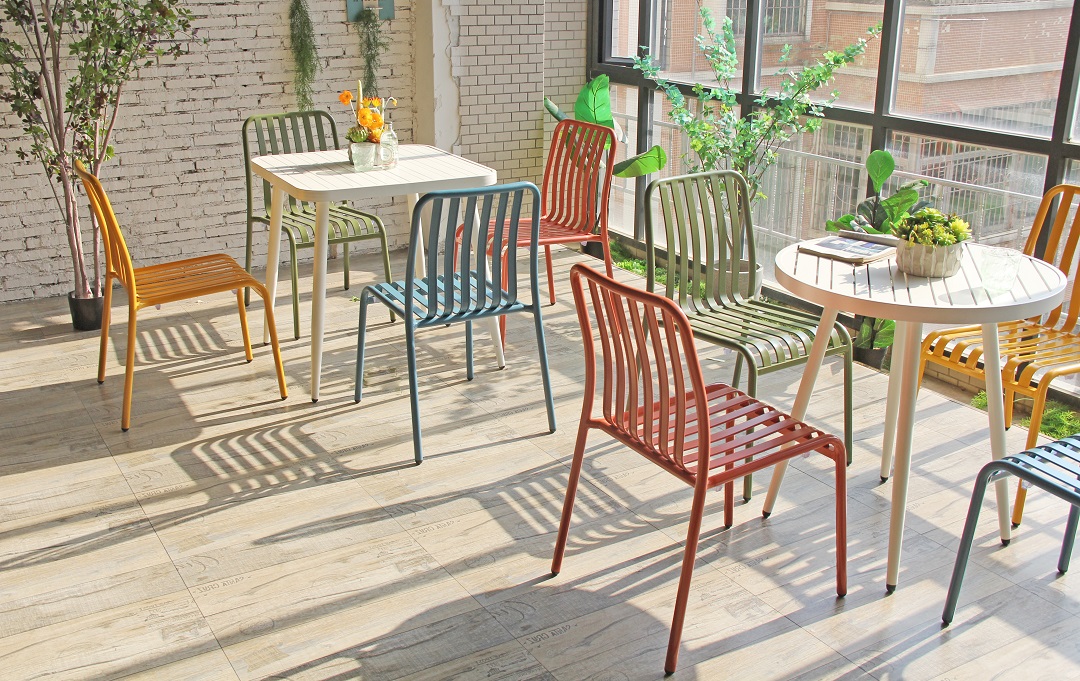
The one outdoor category where buyers stop gambling on the weather — and start calculating ten-year returns.
Every wholesaler knows the phone call. A retailer in Florida, a hotel group in Dubai, a café chain in Sydney — all calling for the same reason. Last season’s sets have already failed. Teak has split along the grain, mild steel has bled rust onto the terrace tiles, resin wicker has turned brittle and chalky in the sun. Nobody did anything wrong. The weather simply did what weather does.
Aluminum Outdoor Furniture behaves differently — not because aluminum is magic, but because properly engineered aluminum is indifferent to water, sunlight, frost, and salt. This guide explains why, how professional buyers should specify it, and how to turn that durability into repeat orders.
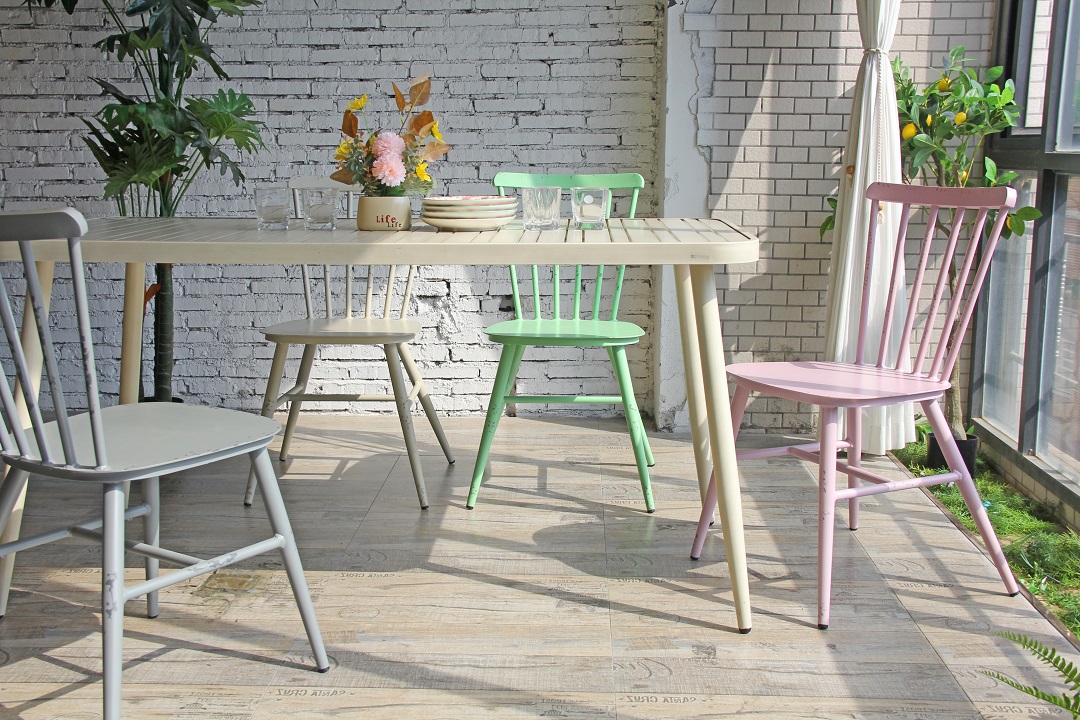
<
Outdoor furniture rarely fails from one dramatic event. It dies slowly, under four stresses acting at once:
Aluminum resists all four by nature. Within seconds of exposure to air, a thin, transparent aluminum oxide layer forms and seals the surface against further attack. That is the fundamental difference: aluminum does not need a coating to survive outdoors. Powder coating is there for colour, texture, and scratch resistance — not as the only barrier against corrosion.
Ask most suppliers whether their range is waterproof aluminum furniture and you will get a sentence. Ask a serious manufacturer and you will get a specification. Three things make “waterproof” real:
6063-T5 is the industry-standard extrusion grade for outdoor frames, chosen for strength, weldability, and finish quality. Wall thickness matters more than most buyers realise: around 1.2 mm suits light residential dining chairs, while commercial stacking chairs, loungers, barstools, and anything dragged daily should be specified at 1.6–2.0 mm. Put the number in writing on the purchase order — “aluminum frame” on a quotation tells you almost nothing.
Powder coating is applied electrostatically and cured at roughly 160–200°C, fusing pigment and resin into a continuous film far tougher than wet paint. Two details separate good from cheap: the coating must be applied after all welding and drilling, so no bare metal edge is left exposed, and pre-treatment must be complete — coating adhesion, not the powder itself, is what fails first in salty air.
Corrosion resistance is measurable. Salt-spray testing under ISO 9227 or ASTM B117 simulates years of salt-laden air in hours. For coastal hospitality projects, marine-grade systems reaching 1,000–2,000 hours before visible corrosion are the benchmark, while premium multi-coat finishes keep colour change below ΔE 2 — invisible to the human eye — after years of UV exposure. Ask for the report, not the adjective.
When those three boxes are ticked, waterproof aluminum furniture stops being a claim and becomes a number your customers can rely on.
<
For a wholesale buyer, the metallurgy only matters if it converts into container economics. Aluminum outdoor chair and table furniture wins on four commercial figures.
Buyers who run this list stop receiving the two-year failure phone call.
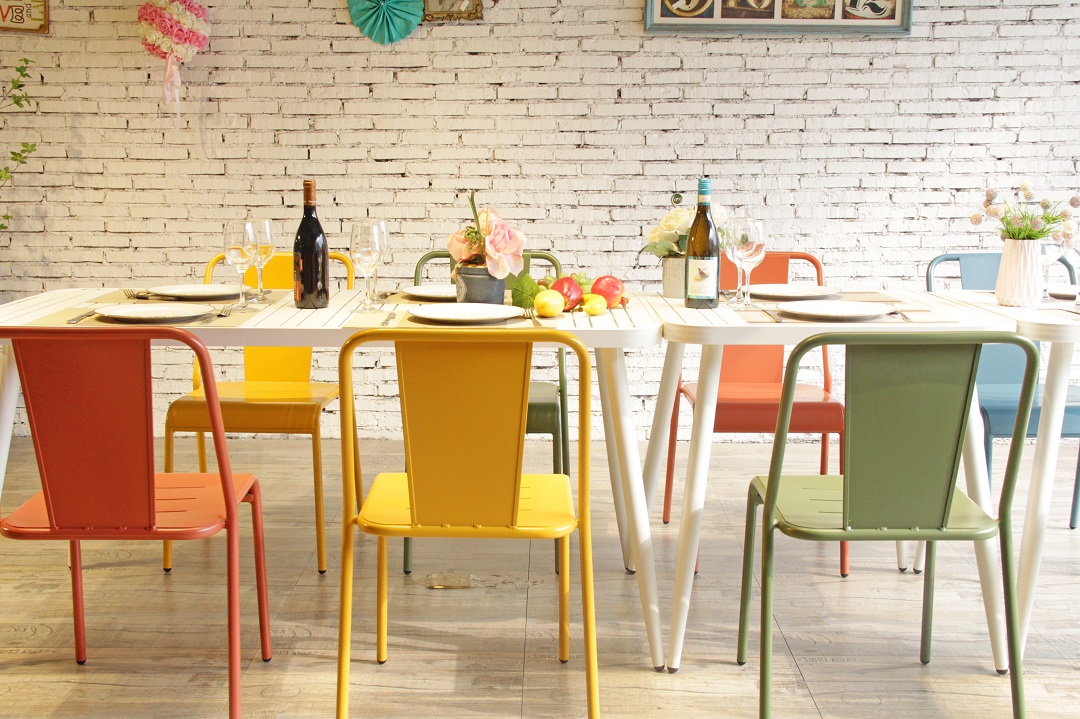
<
Guangzhou CDG Furniture Co., Ltd. has manufactured commercial chairs and tables since 2006 from a 10,000-square-metre workshop in Huadu District, Guangzhou. Nearly two decades of hospitality, event, and contract projects have shipped furniture to Australia, North America, South America, Europe, South Africa, and the Middle East — and the company exhibits at IMM Cologne, CIFF Guangzhou, Spoga+Gafa, and the Shanghai expo, so buyers can inspect finish quality in person.
The outdoor aluminum program is built around the principles above. Stackable commercial chairs such as the 737S-H45-ALU garden event chair and the 727S-H45-ALU Windsor bistro chair are specified for daily stacking and dragging. Matching tables — the 714DT-ALU-SQ75 square outdoor table with its anti-aging vintage finish, or the 731DT-ALU-RE160 aluminum bistro set — let a buyer build a coordinated indoor/outdoor range from a single supplier.
Because CDG manufactures rather than trades, colour, size, finish, and branding can be customised for private-label programs, with modest order quantities and FOB, CIF, or EXW shipping through Guangzhou or Shenzhen. Full specifications are on the product pages.
Yes. Aluminum does not absorb water and cannot rust; its natural oxide layer prevents corrosion. What varies between suppliers is the finish and the joint quality. Specify alloy, wall thickness, coating process, and salt-spray results, and the furniture will outlast the weather rather than merely survive it.
Aluminum releases heat faster than iron or timber, so it does not store heat the way denser materials do. Light-coloured coatings, open mesh or slatted seats, and breathable cushions keep surface temperatures comfortable in high-UV markets.
Yes — that is the point of the category. Well-specified aluminum outdoor chair and table furniture stays on the terrace through rain, frost, and summer UV with only routine cleaning. Cushions and textiles need seasonal care, not the frames.
It depends on the model and the customisation level. Aluminum trial orders typically start at around ten sets, with production scheduled against the confirmed sample. Container programs are planned around your shipping calendar, so early specification conversations shorten lead times.
Rain, sun, frost, and salt will keep testing every piece of furniture you import. The only question is whether your supplier engineered for them. If you want a partner who can show you specifications, test data, and finished product rather than a brochure, talk to the CDG Furniture team. Send us your market, your climate, and your target retail price, and we will come back with a quoting package you can take straight to your customers.
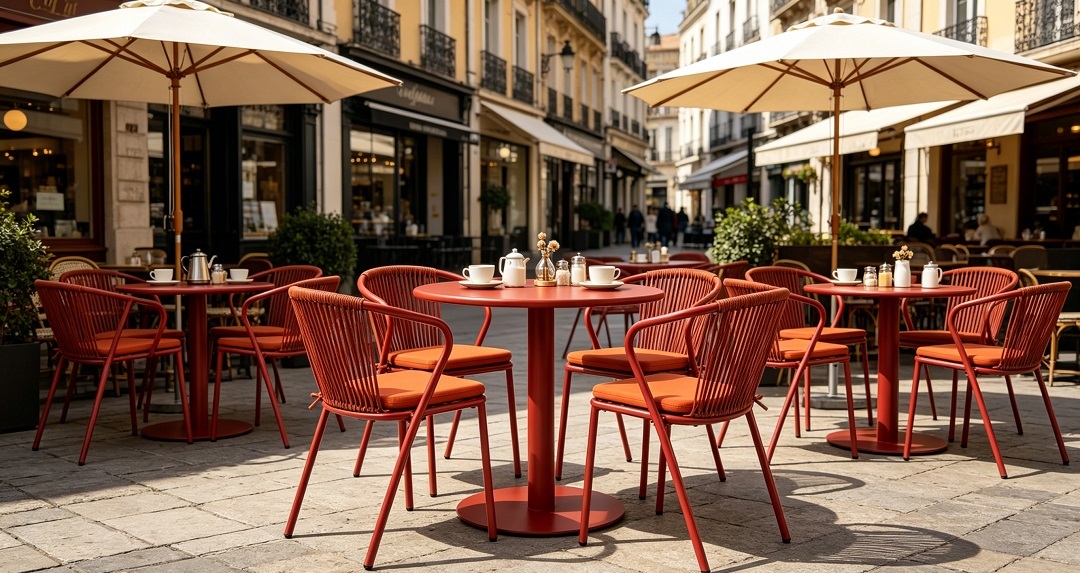
As temperatures drop and patio season winds down across many parts of the world, outdoor restaurant operators face a critical decision: how to protect their outside furniture investments through the colder months. Whether you run a beachfront café in Australia, a bistro in London, or a rooftop restaurant in New York, the steps you take now will determine whether your outdoor chair and table furniture survives to serve guests next spring—or ends up in a landfill.
At CDG Furniture, we’ve been manufacturing commercial-grade outdoor furniture since 2006, supplying restaurants, hotels, and hospitality venues across North America, Europe, Australia, and the Middle East. In this guide, we’ll walk you through a practical, material-specific approach to preparing your outside furniture for autumn and winter.
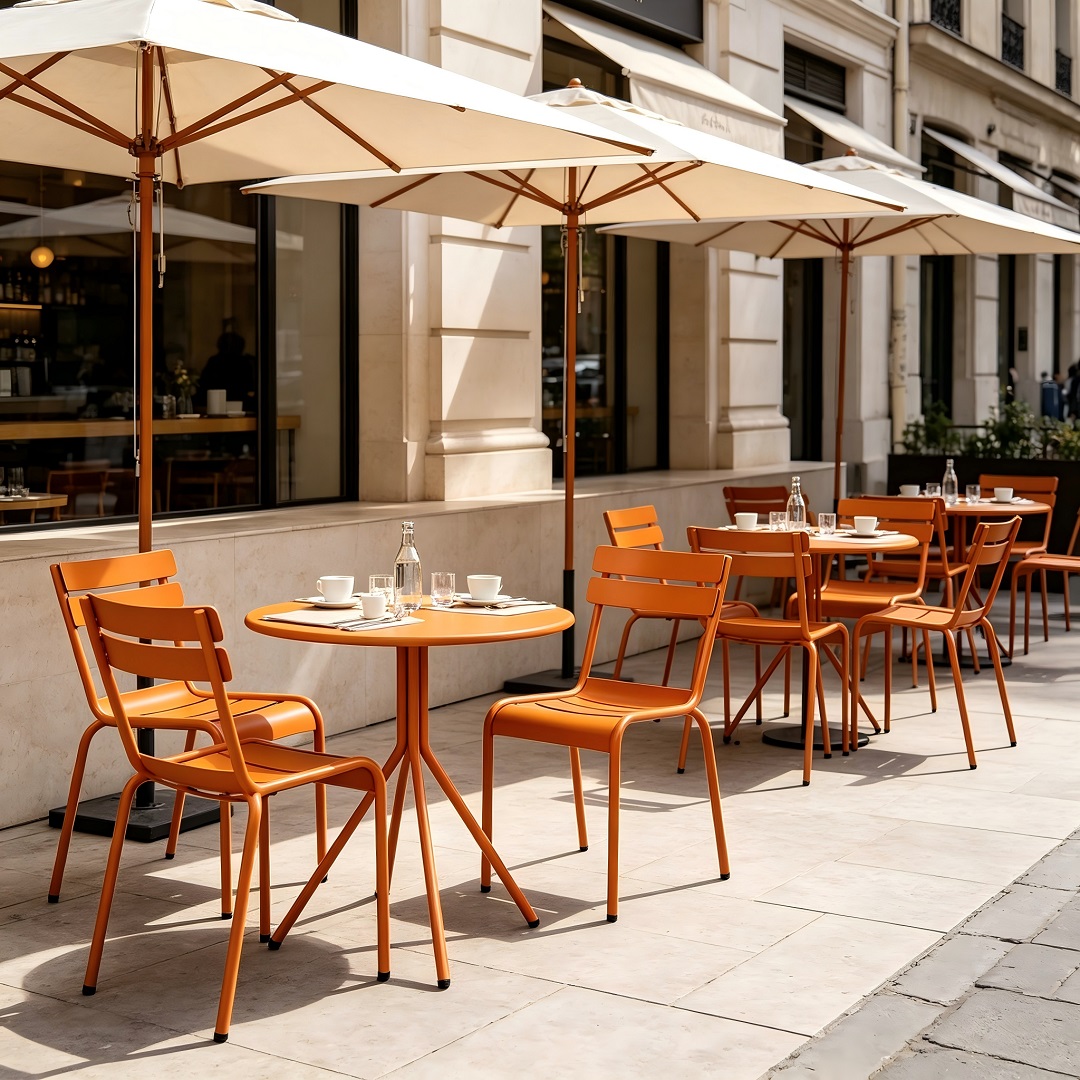
<
For restaurant operators, outside furniture is not a seasonal accessory—it’s revenue-generating infrastructure. Your patio seating earns money on every sunny evening, and replacing deteriorated furniture every 18 to 24 months erodes your margins.
The global commercial outdoor furniture market was estimated at USD 21.60 billion in 2024 and is projected to reach USD 37.77 billion by 2033, growing at a CAGR of 6.6%. This growth reflects increasing demand for durable, weather-resistant furniture that can withstand year-round exposure. Proper winterization isn’t just maintenance—it’s asset protection.
Before you cover, store, or treat any piece of outside furniture, deep clean it. Dirt, food residue, and organic debris left on surfaces through winter can cause staining, mold growth, and surface degradation.
Use a soft-bristle brush and a mild soap-and-water solution—roughly one tablespoon of mild detergent per gallon of water. Avoid abrasive cleaners or high-pressure washers, which can damage powder coatings and scratch aluminum surfaces. Pay special attention to crevices, joints, and underside surfaces where moisture and debris accumulate.
After cleaning, dry every piece completely. This is non-negotiable. Trapped moisture is the single biggest cause of winter damage, particularly in cold climates where water freezes and expands inside frames and joints.
Different materials demand different winterization approaches. Here’s how to treat the most common commercial outdoor furniture materials.
Aluminum is one of the best choices for commercial outdoor chair and table furniture because it’s naturally resistant to water and won’t rust. However, powder coatings can chip.
Inspect frames for scratches or chips before winter. For small nicks, apply touch-up paint to prevent exposed metal from oxidizing. To add an extra layer of protection, apply a coat of clear liquid car wax at least once a year—this shields the finish from moisture and UV exposure. For coastal venues, clean aluminum frames weekly or biweekly to remove salt residue, and wax quarterly.
PE rattan furniture with aluminum frames is moisture-proof, anti-aging, and insect-resistant, making it a low-maintenance option for restaurants. Clean the woven surfaces with mild soapy water and a soft brush, then rinse and dry. If your venue is in a harsh winter region, cover the furniture or move it to a sheltered area. Avoid stacking heavy items on woven surfaces, which can deform the weave over time.
Teak contains natural oils that help it handle moisture better than many other wood species. For teak outside furniture, autumn is the ideal time to clean the surface and apply a protective sealant or oil. If you prefer the silver-grey patina that teak naturally develops, you can skip the oil—but a sealant will still help prevent surface cracking from freeze-thaw cycles.
Always elevate wooden furniture off the ground using pavers, pallets, or risers to keep legs out of standing water and melting snow.
Steel and wrought iron require the most vigilance. Inspect for rust spots and treat them immediately with a rust converter and touch-up paint before winter sets in. Like aluminum, these materials benefit from an annual wax application. If your furniture is not powder-coated, consider applying an exterior-grade paint before the cold season.
Fabric cushions are the most vulnerable component of any outside furniture setup. Even “weather-resistant” cushions are not immune to mold or fading during extended winter exposure.
Remove all cushions before winter. Wash them according to the manufacturer’s instructions and dry them completely—ideally in direct sunlight. Store cushions indoors in breathable storage bags or lidded containers with ventilation holes. Avoid wrapping cushions in plastic, which traps condensation and promotes mold growth.
If you must leave cushions on-site, use high-quality, waterproof, UV-resistant covers designed specifically for outdoor use. But for commercial restaurant operations, indoor storage is always the superior option.
If you can’t store furniture indoors, protective covers are essential. However, the wrong cover can do more harm than good.
Choose breathable, waterproof covers made from solution-dyed polyester or similar materials. Non-breathable covers trap moisture underneath, creating ideal conditions for corrosion and mold. Look for covers with mesh air vents and drawstring cord locks to secure them against winter winds.
For tables left outdoors, place a bucket or ball in the center of the table under the cover to create a peak that allows rain and snow to run off rather than pooling. Secure covers with bungee cords or ties around the legs—winter storms can lift covers and expose furniture to the elements.
Where and how you position furniture during winter matters as much as how you cover it. Furniture placed directly on wet ground absorbs moisture through its feet and lower frame. Use wooden blocks, pallets, or commercial furniture risers to keep legs off the ground.
Stack chairs and foldable items neatly in a dry, ventilated space, but never store resin or aluminum furniture upside down—water can accumulate inside frames and cause damage when it freezes. Store frames upright so any accumulated moisture drains naturally.
For many restaurant operators, completely shutting down outdoor seating during autumn and winter represents lost revenue. If your climate allows—or if you’ve invested in patio heating and enclosures—you can extend your outdoor dining season significantly.
Removable enclosures, such as pergolas with canopy structures, allow you to open or close your patio depending on temperature. For colder regions, permanent structures offer greater stability against adverse weather. When selecting furniture for year-round outdoor use, choose materials with natural insulation properties—synthetic wicker, teak, and specialized resin do not become freezing cold to the touch like bare metal.
This is where your outside furniture investment strategy matters. Furniture designed for commercial use, with powder-coated aluminum frames and weather-resistant finishes, can remain outdoors through autumn and winter with proper care—allowing you to capture revenue from guests who enjoy the crisp-weather dining experience.
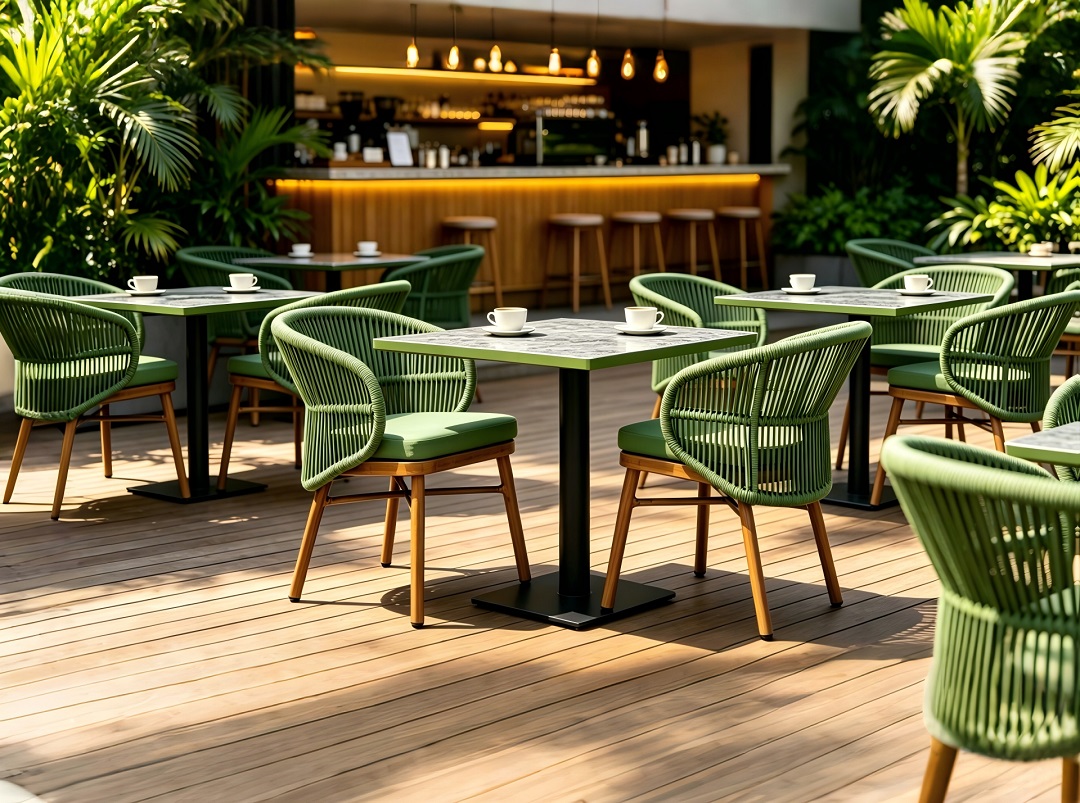
At CDG Furniture, every piece of outside chair and table furniture we manufacture is designed with commercial endurance in mind. Our 10,000-square-meter factory in Guangzhou produces outdoor furniture using powder-coated aluminum frames, UV-stable synthetic wicker, and premium teak and acacia hardwoods. Each piece is handcrafted and finished to withstand daily commercial use and seasonal weather extremes.
We understand that restaurant operators need furniture that performs, not just looks good on delivery day. That’s why our outdoor collections are engineered with:
Our products serve hospitality clients across Australia, North America, Europe, South Africa, and the Middle East—each with different climate challenges. Whether you need outside furniture for a tropical terrace or a Scandinavian winter garden, we can customize specifications to match your local conditions.
Before the first frost arrives, run through this checklist:
If your current outside furniture didn’t survive last winter, or if you’re planning a new outdoor dining space that can handle year-round commercial use, CDG Furniture can help. We offer OEM and ODM services for restaurant and hospitality clients worldwide, with customizable materials, finishes, and designs tailored to your climate and brand.
Contact us today to discuss your outside furniture requirements—whether you’re sourcing a single prototype or a full container order. Our team will work with you to select the right materials, configurations, and protective specifications for your venue’s unique conditions. Your patio deserves furniture that works as hard as you do.