
As temperatures drop and patio season winds down across many parts of the world, outdoor restaurant operators face a critical decision: how to protect their outside furniture investments through the colder months. Whether you run a beachfront café in Australia, a bistro in London, or a rooftop restaurant in New York, the steps you take now will determine whether your outdoor chair and table furniture survives to serve guests next spring—or ends up in a landfill.
At CDG Furniture, we’ve been manufacturing commercial-grade outdoor furniture since 2006, supplying restaurants, hotels, and hospitality venues across North America, Europe, Australia, and the Middle East. In this guide, we’ll walk you through a practical, material-specific approach to preparing your outside furniture for autumn and winter.
<
Why Winter Preparation Is a Business Decision
For restaurant operators, outside furniture is not a seasonal accessory—it’s revenue-generating infrastructure. Your patio seating earns money on every sunny evening, and replacing deteriorated furniture every 18 to 24 months erodes your margins.
The global commercial outdoor furniture market was estimated at USD 21.60 billion in 2024 and is projected to reach USD 37.77 billion by 2033, growing at a CAGR of 6.6%. This growth reflects increasing demand for durable, weather-resistant furniture that can withstand year-round exposure. Proper winterization isn’t just maintenance—it’s asset protection.
Step 1: Clean Thoroughly Before Anything Else
Before you cover, store, or treat any piece of outside furniture, deep clean it. Dirt, food residue, and organic debris left on surfaces through winter can cause staining, mold growth, and surface degradation.
Use a soft-bristle brush and a mild soap-and-water solution—roughly one tablespoon of mild detergent per gallon of water. Avoid abrasive cleaners or high-pressure washers, which can damage powder coatings and scratch aluminum surfaces. Pay special attention to crevices, joints, and underside surfaces where moisture and debris accumulate.
After cleaning, dry every piece completely. This is non-negotiable. Trapped moisture is the single biggest cause of winter damage, particularly in cold climates where water freezes and expands inside frames and joints.
Step 2: Material-Specific Care for Outside Chair and Table Furniture
Different materials demand different winterization approaches. Here’s how to treat the most common commercial outdoor furniture materials.
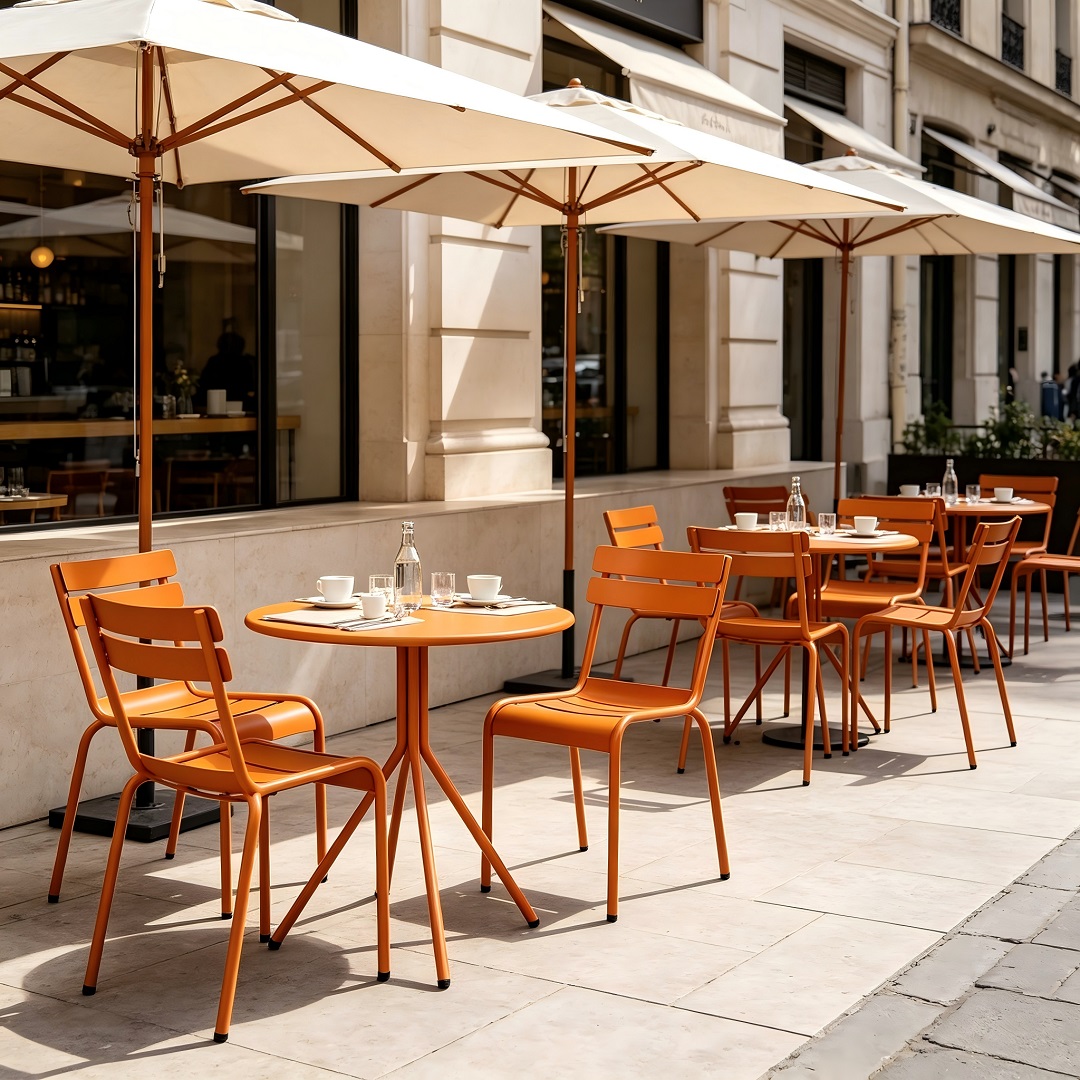
Powder-Coated Aluminum
Aluminum is one of the best choices for commercial outdoor chair and table furniture because it’s naturally resistant to water and won’t rust. However, powder coatings can chip.
Inspect frames for scratches or chips before winter. For small nicks, apply touch-up paint to prevent exposed metal from oxidizing. To add an extra layer of protection, apply a coat of clear liquid car wax at least once a year—this shields the finish from moisture and UV exposure. For coastal venues, clean aluminum frames weekly or biweekly to remove salt residue, and wax quarterly.
Synthetic Rattan (PE Wicker)
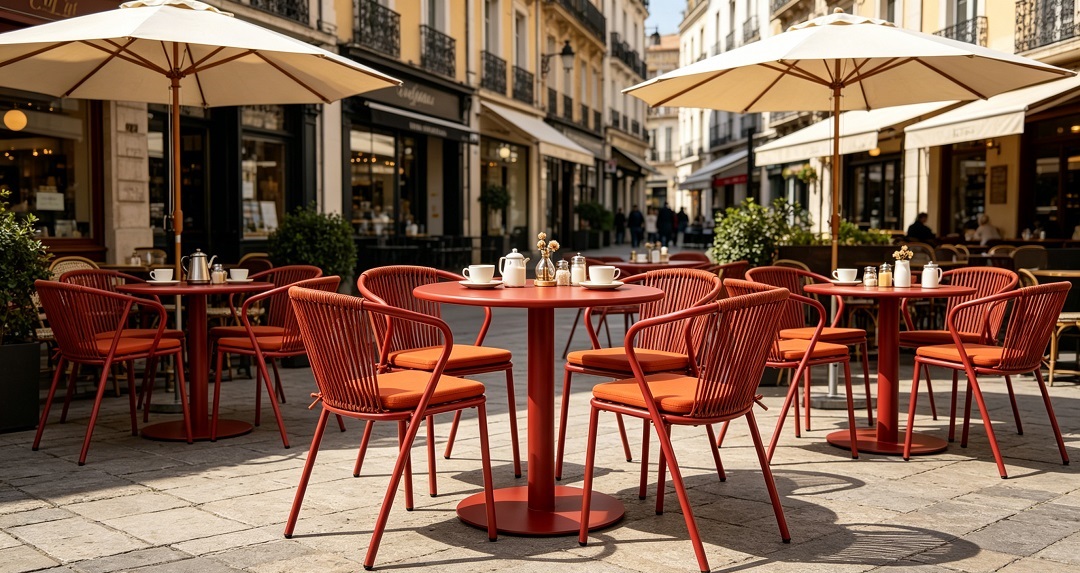
PE rattan furniture with aluminum frames is moisture-proof, anti-aging, and insect-resistant, making it a low-maintenance option for restaurants. Clean the woven surfaces with mild soapy water and a soft brush, then rinse and dry. If your venue is in a harsh winter region, cover the furniture or move it to a sheltered area. Avoid stacking heavy items on woven surfaces, which can deform the weave over time.
Teak and Hardwood
Teak contains natural oils that help it handle moisture better than many other wood species. For teak outside furniture, autumn is the ideal time to clean the surface and apply a protective sealant or oil. If you prefer the silver-grey patina that teak naturally develops, you can skip the oil—but a sealant will still help prevent surface cracking from freeze-thaw cycles.
Always elevate wooden furniture off the ground using pavers, pallets, or risers to keep legs out of standing water and melting snow.
Metal (Steel and Wrought Iron)
Steel and wrought iron require the most vigilance. Inspect for rust spots and treat them immediately with a rust converter and touch-up paint before winter sets in. Like aluminum, these materials benefit from an annual wax application. If your furniture is not powder-coated, consider applying an exterior-grade paint before the cold season.
Step 3: Cushions, Textiles, and Soft Furnishings
Fabric cushions are the most vulnerable component of any outside furniture setup. Even “weather-resistant” cushions are not immune to mold or fading during extended winter exposure.
Remove all cushions before winter. Wash them according to the manufacturer’s instructions and dry them completely—ideally in direct sunlight. Store cushions indoors in breathable storage bags or lidded containers with ventilation holes. Avoid wrapping cushions in plastic, which traps condensation and promotes mold growth.
If you must leave cushions on-site, use high-quality, waterproof, UV-resistant covers designed specifically for outdoor use. But for commercial restaurant operations, indoor storage is always the superior option.
Step 4: Covers—Yes, But Choose Wisely
If you can’t store furniture indoors, protective covers are essential. However, the wrong cover can do more harm than good.
Choose breathable, waterproof covers made from solution-dyed polyester or similar materials. Non-breathable covers trap moisture underneath, creating ideal conditions for corrosion and mold. Look for covers with mesh air vents and drawstring cord locks to secure them against winter winds.
For tables left outdoors, place a bucket or ball in the center of the table under the cover to create a peak that allows rain and snow to run off rather than pooling. Secure covers with bungee cords or ties around the legs—winter storms can lift covers and expose furniture to the elements.
Step 5: Elevate and Position
Where and how you position furniture during winter matters as much as how you cover it. Furniture placed directly on wet ground absorbs moisture through its feet and lower frame. Use wooden blocks, pallets, or commercial furniture risers to keep legs off the ground.
Stack chairs and foldable items neatly in a dry, ventilated space, but never store resin or aluminum furniture upside down—water can accumulate inside frames and cause damage when it freezes. Store frames upright so any accumulated moisture drains naturally.
Step 6: Consider Year-Round Use for Revenue Continuity
For many restaurant operators, completely shutting down outdoor seating during autumn and winter represents lost revenue. If your climate allows—or if you’ve invested in patio heating and enclosures—you can extend your outdoor dining season significantly.
Removable enclosures, such as pergolas with canopy structures, allow you to open or close your patio depending on temperature. For colder regions, permanent structures offer greater stability against adverse weather. When selecting furniture for year-round outdoor use, choose materials with natural insulation properties—synthetic wicker, teak, and specialized resin do not become freezing cold to the touch like bare metal.
This is where your outside furniture investment strategy matters. Furniture designed for commercial use, with powder-coated aluminum frames and weather-resistant finishes, can remain outdoors through autumn and winter with proper care—allowing you to capture revenue from guests who enjoy the crisp-weather dining experience.
The CDG Furniture Advantage: Built for Commercial Winterization
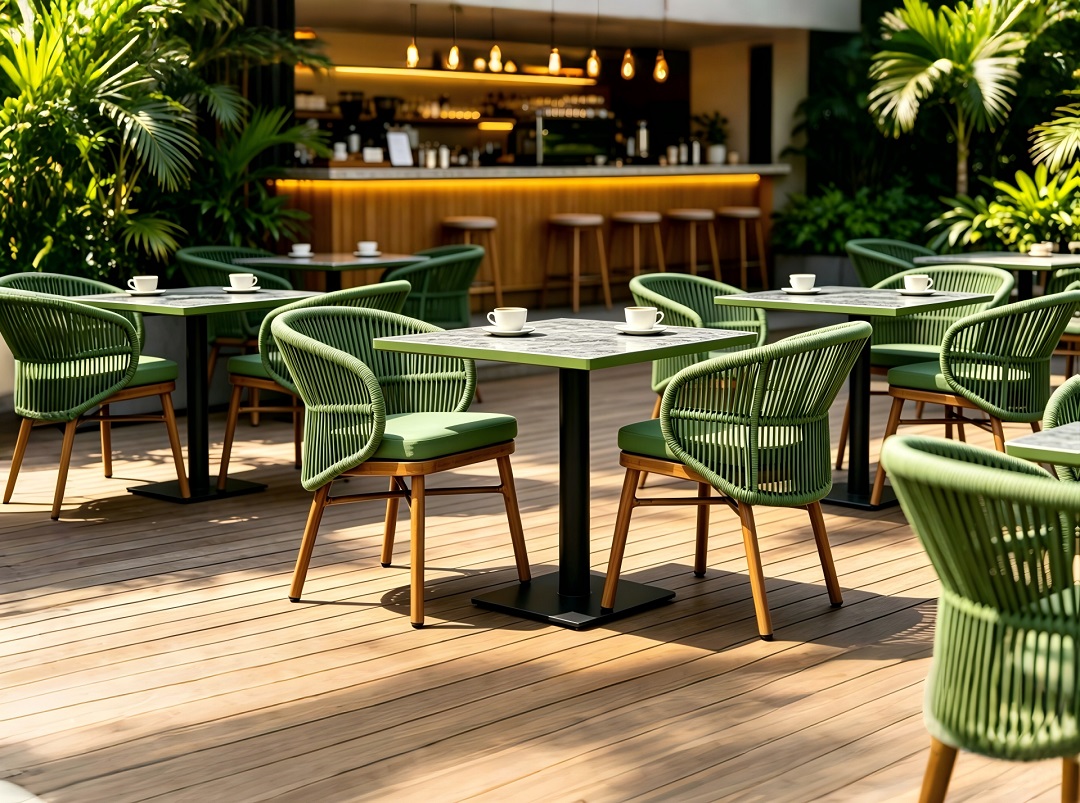
At CDG Furniture, every piece of outside chair and table furniture we manufacture is designed with commercial endurance in mind. Our 10,000-square-meter factory in Guangzhou produces outdoor furniture using powder-coated aluminum frames, UV-stable synthetic wicker, and premium teak and acacia hardwoods. Each piece is handcrafted and finished to withstand daily commercial use and seasonal weather extremes.
We understand that restaurant operators need furniture that performs, not just looks good on delivery day. That’s why our outdoor collections are engineered with:
- ✔Welded aluminum frame construction for structural integrity through freeze-thaw cycles
- ✔UV-resistant powder coatings to prevent fading and surface degradation
- ✔Marine-grade hardware for coastal and high-humidity environments
- ✔Stackable and space-saving designs that simplify off-season storage
Our products serve hospitality clients across Australia, North America, Europe, South Africa, and the Middle East—each with different climate challenges. Whether you need outside furniture for a tropical terrace or a Scandinavian winter garden, we can customize specifications to match your local conditions.
Your Autumn-Winter Preparation Checklist
Before the first frost arrives, run through this checklist:
- Clean all furniture thoroughly with mild soap and water
- Inspect frames for chips, rust, cracks, or loose joints
- Treat wood with sealant or oil; wax aluminum and metal frames
- Remove and store all cushions and textiles indoors
- Elevate remaining furniture off the ground
- Cover with breathable, secured protective covers
- Store stackable and foldable items in dry, ventilated areas
- Schedule a pre-spring inspection to catch damage early
Ready to Upgrade Your Outdoor Furniture Strategy?
If your current outside furniture didn’t survive last winter, or if you’re planning a new outdoor dining space that can handle year-round commercial use, CDG Furniture can help. We offer OEM and ODM services for restaurant and hospitality clients worldwide, with customizable materials, finishes, and designs tailored to your climate and brand.
Contact us today to discuss your outside furniture requirements—whether you’re sourcing a single prototype or a full container order. Our team will work with you to select the right materials, configurations, and protective specifications for your venue’s unique conditions. Your patio deserves furniture that works as hard as you do.